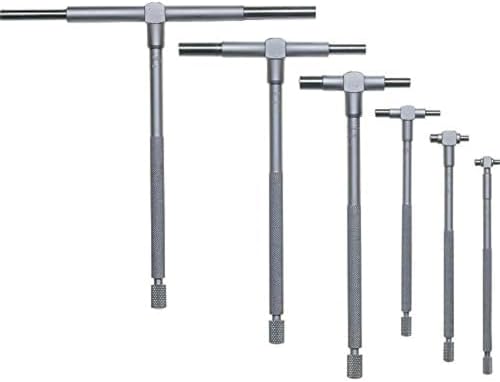
How often have you struggled with accurately measuring internal diameters in hard-to-reach places during construction projects? This common challenge in the hardware and construction export industry can lead to costly errors and project delays. The solution lies in one of the most versatile measurement tools available to construction professionals: the telescopic gauge.
Telescopic gauges, also known as telescoping gauges, are precision instruments designed to measure internal diameters and bores that are difficult to access with standard calipers or micrometers. These tools are essential for construction professionals working with pipe fittings, conduit systems, and mechanical components where precise internal measurements are critical for proper installation and functionality.
Also read – Top 10 Must-Know Ways to Use Feeler Gauges in Daily Maintenance Work – Dubai Edition
How Telescopic Gauges Are Made: From Raw Material to Finished Product
Raw Materials
The primary materials used in manufacturing high-quality telescopic gauges include hardened tool steel, stainless steel, and sometimes carbide-tipped components for enhanced durability. The selection of materials directly impacts the gauge’s longevity, accuracy, and resistance to wear in demanding construction environments.
Manufacturing Process
The manufacturing of telescopic gauges involves several precision stages. It begins with CNC machining of the gauge bodies from solid steel bars, ensuring dimensional accuracy. The telescoping arms are then precision-ground to achieve the required smooth sliding action. Heat treatment processes follow, where components undergo hardening and tempering to achieve optimal strength and wear resistance. The final stages include surface finishing, chrome plating for corrosion resistance, and assembly with precision springs that provide consistent expansion force.
Key Properties Derived from Manufacturing
The manufacturing process imparts several critical properties essential for reliable performance. The heat treatment provides exceptional hardness (typically HRC 58-62), ensuring the gauge maintains accuracy even after repeated use. The precision grinding creates smooth sliding surfaces that enable consistent measurements. Chrome plating offers superior corrosion resistance, crucial for construction sites in humid environments like Dubai. The spring mechanism design ensures repeatable expansion force, guaranteeing measurement consistency across multiple uses.
Quality Control
Quality control in telescopic gauge manufacturing involves rigorous testing at multiple stages. Dimensional accuracy is verified using coordinate measuring machines (CMM), while material hardness is tested using Rockwell hardness testers. Surface finish inspection ensures smooth operation, and functional testing verifies the spring mechanism’s consistency. Manufacturers typically adhere to international standards such as ISO 9001 and DIN standards to ensure product reliability.
Essential Uses in the UAE Construction Landscape
Primary Applications
In the UAE construction sector, telescopic gauges serve multiple critical functions. They are indispensable for measuring internal diameters of conduit pipes during electrical installations in high-rise buildings. Plumbing contractors rely on them for accurately sizing pipe fittings and ensuring proper connections in complex water distribution systems. Mechanical engineers use telescopic gauges for measuring bearing housings and machinery components in HVAC systems and building maintenance equipment.
The tool’s ability to measure internal diameters ranging from 6mm to 300mm makes it versatile for various construction applications. From measuring the internal dimensions of pre-cast concrete elements to verifying the bore sizes of structural steel components, telescopic gauges provide the precision needed for quality assurance in Dubai’s rapidly expanding construction industry.
Choosing the Right Supplier in Dubai: Top Criteria
When selecting a telescopic gauge supplier in Dubai, construction professionals should prioritize several key factors. Look for suppliers with proven industry experience and positive customer testimonials. Verify that they stock products from reputable manufacturers known for quality and precision. Consider the supplier’s technical support capabilities and their ability to provide product training and after-sales service. Availability of calibration services and replacement parts is also crucial for long-term tool maintenance.
According to industry experts at Mitutoyo, one of the leading precision instrument manufacturers, the accuracy and reliability of measurement tools directly impact construction quality and safety standards.
Trusted Hardware Partner in Dubai
For construction professionals seeking reliable telescopic gauges and other precision tools, Lakdawala Trading Co. LLC stands as a trusted partner in the Dubai construction industry. Located in Naif Deria, Dubai, this established company has built a reputation for quality and reliability among contractors and builders throughout the region.
Lakdawala Trading Co. LLC specializes in a comprehensive range of construction and industrial tools, including Cutting Discs, Measuring Tapes, Hole Saws, and Carbide Inserts. Their expertise in precision measurement instruments makes them an ideal choice for construction companies requiring accurate telescopic gauges for their projects.
The company’s commitment to quality is evident in their carefully curated product selection and their dedication to customer service. With years of experience serving the Dubai construction market, Lakdawala Trading Co. LLC understands the specific needs and challenges faced by construction professionals in the region. Visit their website at https://www.lakdawalatrading.com/ to explore their complete product range and discover why they remain the preferred choice for quality-conscious construction professionals.