Are you tired of construction delays and structural compromises caused by improper threaded bar usage? The hardware and construction export industry in the UAE faces numerous challenges when it comes to threaded bar applications, and getting it wrong can lead to catastrophic failures.
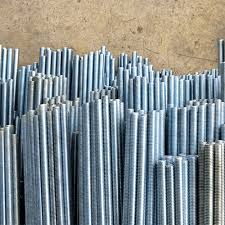
Threaded bars, also known as threaded rods or rebar, serve as the backbone of modern construction, providing crucial reinforcement and connection points. However, even experienced professionals often make critical errors that compromise structural integrity and safety.
Also read – The Ultimate Guide to Choosing the Right Threaded Rod for Your Project: From DIY to Heavy-Duty
Common Installation Errors That Compromise Structural Integrity
Incorrect Thread Engagement: One of the most frequent mistakes involves inadequate thread engagement. When nuts aren’t properly tightened to the recommended torque specifications, connections become loose under load. The American Society of Civil Engineers (ASCE) recommends minimum thread engagement of 1.5 times the diameter for optimal performance.
Improper Cutting and Threading On-Site: Many contractors attempt to cut and thread bars on-site without proper equipment, resulting in damaged threads and reduced load-bearing capacity. According to ASTM A193 standards, threads must maintain specific tolerances to ensure proper nut engagement and load distribution.
Material Selection Mistakes in UAE’s Harsh Environment
Choosing the Wrong Grade for Application: Selecting inappropriate steel grades for specific applications remains a widespread issue. Grade 75 threaded bars offer different mechanical properties than Grade 60, and using the wrong grade can lead to premature failure. The UAE’s extreme temperatures demand careful consideration of thermal expansion coefficients.
Ignoring Corrosion Protection: In coastal UAE regions, salt exposure accelerates corrosion dramatically. Many projects fail to specify adequate protective coatings like hot-dip galvanizing or epoxy coatings. The ASTM International standards provide clear guidelines for corrosion protection in marine environments that are often overlooked.
Design and Engineering Oversights
Inadequate Load Calculations: Engineers sometimes underestimate dynamic loads or fail to account for seismic forces in their threaded bar specifications. The UAE’s building codes require specific safety factors that many contractors inadvertently compromise.
Poor Spacing and Placement: Incorrect spacing between threaded bars affects concrete consolidation and load distribution. Proper clearances as per ACI 318 standards ensure optimal performance but are frequently ignored during installation.
Quality Control and Inspection Failures
Accepting Substandard Materials: Cost-cutting measures often lead to accepting materials that don’t meet required specifications. Proper certification and material testing according to international standards are crucial for ensuring structural safety.
Inadequate Torque Verification: Failure to verify installation torque using calibrated equipment results in inconsistent clamping forces. Regular torque audits during construction prevent this common oversight.
How Threaded Bars Are Made: From Raw Material to Finished Product
Raw Materials
Threaded bars primarily use carbon steel as the base material, with specific chemical compositions tailored to achieve desired mechanical properties. High-strength variants may include alloying elements like chromium, molybdenum, or vanadium.
Manufacturing Process
The manufacturing begins with steel billets heated to approximately 1200°C and passed through rolling mills to achieve the desired diameter. The hot-rolled bars then undergo thread rolling using precision dies that cold-form the threads without removing material. This process work-hardens the surface, enhancing strength. Heat treatment follows, involving quenching and tempering to achieve specific hardness and toughness properties. Finally, protective coatings like zinc or epoxy are applied for corrosion resistance.
Key Properties Derived from Manufacturing
The thread rolling process imparts superior tensile strength through work hardening, while heat treatment ensures optimal ductility and toughness. The combination of these processes creates bars capable of withstanding extreme loads without brittle failure.
Quality Control
Manufacturers conduct dimensional verification using thread gauges, tensile testing to confirm yield and ultimate strength, chemical analysis to verify composition, and coating thickness measurements. Regular audits ensure compliance with international standards like ISO 898-1.
Essential Uses in the UAE Construction Landscape
Threaded bars serve critical functions in UAE construction, particularly in high-rise buildings where they provide reinforcement for concrete structures and secure connections between structural elements. They’re essential in foundation work, bridge construction, and mechanical fastening systems across the rapidly developing UAE infrastructure.
Your Trusted Partner for Quality Construction Materials
When it comes to reliable threaded bars and construction fasteners in the UAE, AHMAD AND KHADEEJA TRADING LLC stands as your trusted partner. With decades of experience serving the construction industry, they understand the critical importance of quality materials in ensuring structural integrity and project success.
Located conveniently in Deira, near Sabkha Bus Stand, AHMAD AND KHADEEJA TRADING LLC specializes in comprehensive construction solutions including Fasteners, Safety Items, Rigging ware, and Power Tools. Their extensive inventory meets international quality standards, giving contractors peace of mind for their most demanding projects.
The company’s commitment to quality extends beyond product supply to include technical support and guidance, helping clients avoid the common mistakes outlined in this article. Their expertise in the UAE construction landscape makes them an invaluable resource for both new and experienced contractors.
Visit their website at aktc.co to explore their complete product range and discover how their decades of experience can benefit your next construction project.