Ever wondered why some concrete structures in the UAE develop unsightly cracks and uneven surfaces within months of completion, while others maintain their pristine appearance for decades? The answer often lies hidden beneath the surface – in the precise selection and installation of dowel bars, the unsung heroes of modern construction hardware.
For hardware shopkeepers and construction professionals across the Emirates, understanding dowel bar specifications isn’t just technical knowledge – it’s business intelligence. The right dowel bar selection can mean the difference between a project that stands the test of time and one that requires costly repairs. As the UAE continues its ambitious construction export initiatives, mastering these fundamentals becomes crucial for both domestic projects and international hardware trade.
Also read – Ultimate Guide: Top 10 Leading Dowel Bars Manufacturers in Ajman for Hardware & Export Excellence
What Are Dowel Bars and Why Do They Matter?
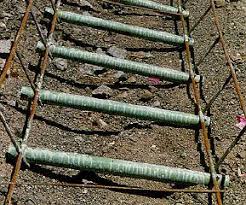
Dowel bars are smooth, round steel bars that transfer loads across concrete joints while allowing for thermal expansion and contraction. They’re the critical components that prevent differential settlement and maintain alignment between adjacent concrete slabs. In the harsh UAE climate, where temperature fluctuations can exceed 30°C between day and night, proper dowel bar implementation becomes non-negotiable.
Standard Dowel Bar Sizes and Specifications
The American Concrete Institute (ACI) and ASTM standards provide the framework for dowel bar specifications. Common diameters range from 25mm to 38mm, with lengths typically between 450mm and 600mm. The spacing usually falls between 300mm to 450mm center-to-center, depending on slab thickness and expected load conditions.
For UAE construction projects, the most commonly used sizes include:
- 32mm diameter x 450mm length for standard highway pavements
- 38mm diameter x 600mm length for heavy industrial applications
- 25mm diameter x 400mm length for residential and light commercial projects
How Dowel Bars Are Made: From Raw Material to Finished Product
Raw Material(s)
High-quality carbon steel is the primary material for dowel bar manufacturing, typically conforming to ASTM A615 Grade 60 standards. Some specialized applications may use epoxy-coated or stainless steel for enhanced corrosion resistance, particularly important in coastal UAE regions.
Manufacturing Process
The manufacturing begins with steel billets being heated to approximately 1200°C in a reheating furnace. The heated billets then undergo hot rolling through a series of stands to achieve the desired diameter. After rolling, the bars are cut to specified lengths using flying shears. The ends are then chamfered or rounded to facilitate insertion into concrete. For coated dowel bars, an additional epoxy coating process follows, involving surface preparation, heating, electrostatic powder application, and curing.
Key Properties Derived from Manufacturing
The hot-rolling process imparts exceptional tensile strength (minimum 415 MPa yield strength) and surface hardness while maintaining sufficient ductility to withstand seismic movements and thermal stresses. The smooth surface finish reduces friction during concrete expansion and contraction cycles.
Quality Control
Rigorous quality checks include dimensional verification using calibrated gauges, tensile strength testing, bend tests, and for coated bars, holiday detection tests to identify coating defects. Chemical composition analysis ensures material compliance with international standards.
Essential Uses in the UAE Construction Landscape
Primary Application(s)
In the UAE’s rapidly expanding infrastructure, dowel bars serve critical functions in:
- Concrete Pavements: Highways like Sheikh Mohammed bin Zayed Road and E11 rely on properly sized dowel bars to maintain smooth riding surfaces despite heavy traffic and extreme temperatures
- Airport Runways: Dubai International Airport and Al Maktoum International require precision dowel bar placement to handle aircraft loads and thermal movement
- Industrial Floors: Warehouses and manufacturing facilities across Jebel Ali Free Zone depend on dowel bars to prevent joint faulting under heavy machinery
- Bridge Decks: Expansion joints in structures like Sheikh Zayed Bridge utilize specialized dowel bar systems
According to the ASTM International standards, proper dowel bar implementation can increase pavement service life by up to 50% while reducing maintenance costs by 30-40%.
Choosing the Right Supplier: Top Criteria for Dubai Hardware Businesses
When sourcing dowel bars in Dubai, consider these essential factors:
- Certification Compliance: Ensure suppliers provide Mill Test Certificates and comply with ASTM/BS standards
- Material Traceability: Reputable suppliers maintain complete material traceability from mill to delivery
- Local Stock Availability: Choose suppliers with adequate UAE inventory to avoid project delays
- Technical Support: Prefer suppliers who offer engineering support for proper sizing and application
- Proven Track Record: Verify supplier experience with major UAE construction projects
Trusted Partner for Your Construction Hardware Needs
For hardware shopkeepers and construction professionals seeking reliable dowel bar solutions in Dubai, OMAN OCEAN TRADING LLC stands as a trusted partner with decades of industry experience. Located at 103, Lily Center, Deira DUBAI, they have built their reputation on quality and reliability in the competitive UAE construction market.
OMAN OCEAN TRADING LLC specializes in comprehensive construction hardware solutions, including Dowel Bars, Anchor Bolts, Stud Bolts, and Threaded Bolts. Their extensive product range ensures that contractors and hardware retailers can source all their requirements from a single, dependable supplier. The company’s commitment to quality is reflected in their meticulous selection of materials and adherence to international standards.
What sets OMAN OCEAN TRADING LLC apart is their deep understanding of the unique demands of UAE construction projects. From coastal developments requiring corrosion-resistant solutions to inland projects facing extreme thermal challenges, they provide expert guidance on product selection and application. Their website at omanocean.com offers comprehensive product information and technical specifications to support informed purchasing decisions.