
Have you ever faced project delays, structural failures, or budget overruns because of incorrectly sized threaded bars? In the demanding construction landscape of the UAE, where skyscrapers touch the clouds and infrastructure projects redefine possibilities, selecting the right diameter for threaded bars isn’t just a technical detail—it’s a critical decision that can make or break your project’s success.
The solution lies in understanding threaded bars as more than just simple fasteners. These essential construction hardware components serve as the backbone of structural connections, providing the tensile strength and stability needed to withstand the extreme environmental conditions and heavy loads characteristic of UAE construction projects.
Also read – The Ultimate Guide to Choosing the Right Threaded Rod for Your Project: From DIY to Heavy-Duty
Understanding Threaded Bar Fundamentals
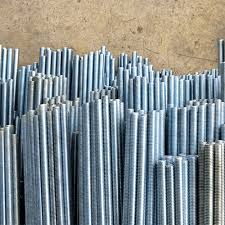
Threaded bars, often referred to as threaded rods or all-thread rods, are continuous lengths of steel bar with threading along their entire surface. Unlike bolts that have a head on one end, threaded bars provide maximum flexibility in length and connection points. The diameter of these bars, measured across the threaded portion, directly determines their load-bearing capacity and application suitability.
Common diameters range from M6 (6mm) for light-duty applications to M64 (64mm) and beyond for heavy structural connections. The ‘M’ designation refers to metric thread sizing, which is standard in the UAE construction industry. Each diameter specification corresponds to specific tensile strength requirements and load capacities that must align with your project’s structural demands.
How Threaded Bars Are Made: From Raw Material to Finished Product
Raw Materials
Threaded bars primarily use carbon steel as the base material, with variations including stainless steel for corrosion resistance and alloy steel for enhanced strength properties. The quality of raw steel directly impacts the final product’s performance, making material selection crucial for construction applications in the UAE’s harsh climate.
Manufacturing Process
The manufacturing journey begins with high-quality steel rods that undergo precise cutting to required lengths. The threading process involves cold rolling or cutting threads using specialized machinery that maintains exact pitch and depth specifications. Cold rolling, the preferred method for high-strength applications, work-hardens the steel surface, enhancing its mechanical properties without compromising structural integrity.
Following threading, bars may undergo heat treatment processes like quenching and tempering to achieve desired hardness and strength characteristics. Surface treatments including hot-dip galvanizing, zinc plating, or epoxy coatings are applied to provide corrosion resistance—a critical consideration for UAE’s coastal and high-humidity environments.
Key Properties Derived from Manufacturing
The manufacturing process imparts several essential properties. Tensile strength is achieved through proper material selection and heat treatment, allowing bars to withstand pulling forces without breaking. Corrosion resistance comes from surface treatments that protect against the UAE’s saline atmosphere and extreme weather conditions. Dimensional accuracy ensures proper fit with nuts and other connecting elements, while thread integrity guarantees secure fastening without stripping or loosening under vibration or load variations.
Quality Control
Reputable manufacturers implement rigorous quality control measures including dimensional verification using thread gauges, tensile testing to verify strength ratings, hardness testing, and visual inspection for surface defects. Compliance with international standards such as ASTM, ISO, and DIN ensures consistent performance and reliability across all diameter sizes.
Essential Uses in the UAE Construction Landscape
Primary Applications
In the UAE’s construction sector, threaded bars serve critical functions across various applications. For concrete anchoring and reinforcement, they provide secure connections between structural elements, with diameters typically ranging from M12 to M30 depending on load requirements. In steel structure connections, they facilitate the assembly of beams, columns, and trusses, with M16 to M36 diameters being common for medium to heavy structural loads.
Facade and curtain wall systems rely on threaded bars for secure mounting, where M8 to M16 diameters provide the necessary support while accommodating thermal expansion and wind loads. For mechanical, electrical, and plumbing (MEP) installations, smaller diameters from M6 to M12 secure equipment, conduits, and piping systems. The UAE’s mega-projects including high-rise buildings, bridges, and industrial facilities demand precisely sized threaded bars that can withstand extreme conditions while maintaining structural integrity over decades.
Diameter Selection Criteria: Matching Size to Application
Selecting the appropriate threaded bar diameter requires careful consideration of multiple factors. Load requirements represent the primary consideration, with tensile strength calculations determining the minimum diameter needed for safe operation. Environmental conditions specific to the UAE—including high temperatures, humidity, and coastal exposure—influence both diameter selection and corrosion protection requirements.
Connection type and configuration affect diameter choice, as different joint designs distribute loads differently. Space constraints may limit maximum diameter options, while compatibility with existing structures ensures proper integration with other construction elements. Consulting structural engineers and following international standards provides the technical foundation for informed diameter selection.
Common Mistakes to Avoid in Diameter Selection
Many construction professionals make critical errors when selecting threaded bar diameters. Underestimating load requirements leads to insufficient strength and potential failure, while over-specifying diameters increases costs without providing additional benefits. Ignoring environmental factors specific to the UAE results in premature corrosion and reduced service life.
Mixing metric and imperial measurements creates compatibility issues, and failing to account for dynamic loads like wind, seismic activity, or vibration can compromise structural integrity. Proper diameter selection requires balancing technical requirements with practical considerations to achieve optimal performance and cost-effectiveness.
Top Criteria for Choosing a Reliable Supplier in Dubai
Selecting the right supplier for threaded bars in Dubai involves evaluating several key factors. Product quality and certification ensure materials meet required standards and specifications. Technical expertise and support provide guidance on proper diameter selection and application. Inventory availability and delivery reliability prevent project delays, while competitive pricing and payment terms support budget management.
After-sales service and warranty protect your investment, and local market knowledge helps navigate UAE-specific requirements and challenges. Establishing relationships with reputable suppliers who understand the local construction landscape ensures consistent access to quality threaded bars in the required diameters and specifications.
Trusted Partner for Your Construction Hardware Needs
When it comes to sourcing high-quality threaded bars in the UAE, AHMAD AND KHADEEJA TRADING LLC stands as a trusted partner for construction professionals. With decades of experience serving the Dubai construction market, they have built a reputation for reliability, quality, and expert service that contractors and project managers depend on.
Specializing in comprehensive construction hardware solutions, AHMAD AND KHADEEJA TRADING LLC offers an extensive range of products including Fasteners, Safety Items, Rigging ware, and Power Tools. Their deep understanding of threaded bar applications across different construction scenarios enables them to provide expert guidance on diameter selection, material specifications, and proper installation techniques.
Located conveniently in Deira, Near Sabkha Bus Stand, they offer easy access for construction professionals across Dubai. Their commitment to quality is evident in their carefully curated product selection, which includes threaded bars in various diameters and specifications to meet diverse project requirements. Visit their website at aktc.co to explore their complete product range and discover how they can support your next construction project with reliable hardware solutions.