
Are you tired of seeing concrete slabs crack and fail prematurely under heavy traffic loads? Do you wonder why some construction projects in the UAE withstand the test of time while others deteriorate quickly? The answer often lies in a simple yet crucial component: dowel bars for load transfer.
In the demanding construction landscape of the United Arab Emirates, where temperatures soar and infrastructure faces constant stress, proper load transfer mechanisms become non-negotiable. Dowel bars serve as the unsung heroes that ensure concrete joints function correctly, preventing costly repairs and maintaining structural integrity for decades.
Also read – Ultimate Guide: Top 10 Leading Dowel Bars Manufacturers in Ajman for Hardware & Export Excellence
What Are Dowel Bars and Why Do They Matter?
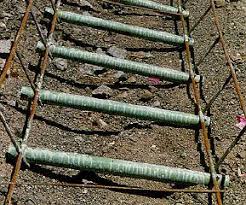
Dowel bars are smooth, round steel bars that transfer loads across concrete joints while allowing for horizontal movement. They’re strategically placed at transverse joints in concrete pavements, slabs, and other structures to prevent differential settlement and maintain alignment. Without proper dowel bars, concrete slabs would develop faulting, cracking, and premature failure under repeated loading.
How Dowel Bars Are Made: From Raw Material to Finished Product
Raw Materials
The primary material used in dowel bar manufacturing is high-strength steel, typically meeting ASTM A615 Grade 60 standards or equivalent. Some specialized applications may use stainless steel or epoxy-coated steel for enhanced corrosion resistance, particularly important in coastal UAE environments where salt exposure accelerates corrosion.
Manufacturing Process
The manufacturing journey begins with steel billets being heated to precise temperatures in reheat furnaces. These heated billets then undergo hot rolling through a series of stands to achieve the desired diameter and round shape. The bars are then cut to specified lengths using flying shears or cold saws.
After cutting, the bars undergo surface finishing to achieve the required smoothness. This involves descaling to remove mill scale and surface imperfections. For corrosion protection, many dowel bars receive additional treatments like epoxy coating or galvanizing. The final step involves precise end treatment – typically chamfering or rounding the ends to facilitate insertion and prevent concrete damage during placement.
Key Properties Derived from Manufacturing
The manufacturing process imparts several critical properties:
High Strength: The hot rolling process aligns the steel’s grain structure, providing the tensile strength needed to transfer heavy loads without deformation.
Smooth Surface: Precision finishing ensures minimal friction, allowing free horizontal movement while maintaining vertical load transfer capability.
Corrosion Resistance: Protective coatings and proper material selection ensure longevity in harsh UAE environmental conditions.
Quality Control
Rigorous quality control measures include dimensional accuracy checks using calibrated instruments, material strength testing through tensile tests, visual inspection for surface defects, and coating thickness verification. Compliance with international standards like ASTM A615 and local UAE construction specifications is mandatory.
Essential Uses in the UAE Construction Landscape
In the UAE’s rapidly developing infrastructure, dowel bars play critical roles across multiple applications. They’re essential in highway and airport runway construction, where they transfer vehicle and aircraft loads across concrete pavement joints. In industrial flooring for warehouses and manufacturing facilities, they prevent joint faulting under heavy machinery and forklift traffic.
Commercial building foundations utilize dowel bars at construction joints between concrete pours, ensuring structural continuity. Bridge approach slabs and parking structures also rely heavily on properly designed dowel bar systems to handle thermal expansion and contraction while maintaining load transfer efficiency.
According to the Federal Highway Administration, proper dowel bar implementation can extend pavement life by 30-50%, making them a cost-effective investment for UAE’s infrastructure projects.
Choosing a Reliable Dowel Bar Supplier in Dubai: Top Criteria
Selecting the right supplier for your construction hardware needs requires careful consideration. Look for suppliers with proven track records in the UAE market, proper certification for their products, and technical support capabilities. Material traceability, consistent quality, and timely delivery are non-negotiable factors in the fast-paced UAE construction environment.
Trusted Partner for Your Construction Hardware Needs
When it comes to reliable construction hardware supply in the UAE, OMAN OCEAN TRADING LLC stands as a trusted partner for contractors and developers. With decades of experience serving the construction industry, they have built a reputation for quality and reliability that few can match.
Located at 103, Lily Center, Deira DUBAI, OMAN OCEAN TRADING LLC specializes in premium construction fasteners including Dowel Bars, Anchor Bolts, Stud Bolts, and Threaded Bolts. Their extensive product range meets the diverse needs of UAE’s construction sector, from massive infrastructure projects to commercial developments.
The company’s commitment to quality is evident in their rigorous material selection and adherence to international standards. Their technical expertise ensures clients receive not just products, but comprehensive solutions tailored to specific project requirements. Visit their website at omanocean.com to explore their complete product portfolio and technical specifications.