
Posted on Leave a comment

Complete Guide: Drywall Screws vs. Wood Screws – Avoid Costly Construction Mistakes

Drywall Screws vs. Wood Screws

Are you tired of construction projects failing due to using the wrong fasteners? The hardware and export industry in UAE faces this challenge daily, where choosing between drywall screws and wood screws can make or break your building’s integrity.

Also read – Top 10 Must-Know Insights: Drywall Screws Price List & UAE Market Rates in 2025

The Critical Differences That Matter

In the fast-paced construction environment of Dubai and across UAE, understanding the fundamental differences between drywall screws and wood screws is not just technical knowledge – it’s business survival. These two fasteners may look similar to the untrained eye, but their applications, strengths, and limitations are worlds apart.

How They Are Made: From Raw Material to Finished Product

Raw Materials

Both screw types primarily use carbon steel or stainless steel as base materials. Drywall screws often feature a phosphate coating for corrosion resistance, while wood screws typically have zinc plating. The choice of material directly impacts durability in UAE’s humid coastal climate.

Manufacturing Process

The manufacturing begins with wire drawing, where steel rods are pulled through dies to achieve the required diameter. Next comes cold heading – the wire is cut and formed into screw blanks using high-pressure dies. Thread rolling follows, where dies impress threads onto the shank without removing material, creating stronger threads through work hardening.

For drywall screws, the distinctive bugle head is formed to prevent paper tearing, while wood screws receive sharper points and deeper threads. The final stage involves heat treatment for strength enhancement and coating application for corrosion protection.

Key Properties Derived from Manufacturing

The manufacturing process imparts critical properties: tensile strength from cold working and heat treatment, corrosion resistance from specialized coatings, and shear strength from proper thread design. Drywall screws excel in holding power against pull-out forces, while wood screws provide superior shear strength for structural applications.

Quality Control

Reputable manufacturers implement rigorous quality checks including dimensional accuracy verification, coating thickness measurement, torque testing, and salt spray testing for corrosion resistance – crucial for UAE’s demanding construction standards.

Essential Uses in UAE Construction Landscape

Drywall Screws: The Interior Specialist

Drywall screws are specifically engineered for attaching drywall to metal or wood studs. Their fine threads, sharp points, and bugle heads make them ideal for the extensive interior work seen in Dubai’s high-rise residential and commercial projects. According to the ASTM International standards, these screws must meet specific performance criteria for successful drywall installation.

Wood Screws: The Structural Workhorse

Wood screws feature coarser threads and sharper points designed specifically for wood-to-wood connections. They’re essential for framing, decking, furniture assembly, and structural woodwork throughout UAE construction sites. Their tapered shanks and deep threads provide exceptional holding power in timber applications.

Choosing Your Construction Partner in Dubai

When sourcing construction fasteners in the UAE market, experience and reliability matter more than price alone. OMAN OCEAN TRADING LLC stands as a trusted partner for construction professionals across the region.

With decades of experience in the hardware and construction supply industry, OMAN OCEAN TRADING LLC has built a reputation for quality and reliability. Their deep understanding of UAE construction requirements ensures clients receive products that meet the highest standards.

The company specializes in critical construction components including Dowel Bars, Anchor Bolts, Stud Bolts, and Threaded Bolts – all essential for modern construction projects. Their comprehensive product range and technical expertise make them the go-to supplier for contractors and builders throughout Dubai and the wider UAE region. Visit their website at omanocean.com to explore their complete product portfolio.

Located at 103, Lily Center, Deira DUBAI, OMAN OCEAN TRADING LLC combines strategic location with industry knowledge to serve the construction sector effectively. Their commitment to quality control and customer service has made them a preferred supplier for numerous major construction projects across the Emirates.

Call Now

Leave a Reply

Your email address will not be published. Required fields are marked *

Posted on Leave a comment

Complete Guide: Drywall Screws vs. Wood Screws – Avoid Costly Construction Mistakes

Drywall Screws vs. Wood Screws

Are you tired of dealing with screw failures, stripped threads, and compromised structural integrity in your construction projects? The solution lies in understanding the fundamental differences between drywall screws and wood screws – two specialized hardware components that serve distinct purposes in modern construction.

In the competitive UAE construction landscape, where quality and durability are paramount, choosing the right screw type can mean the difference between a successful project and costly rework. This comprehensive guide will equip hardware shopkeepers and construction professionals with the knowledge needed to make informed decisions about screw selection, ensuring optimal performance and customer satisfaction.

Also read – Top 10 Must-Know Insights: Drywall Screws Price List & UAE Market Rates in 2025

Understanding the Fundamental Differences

Drywall screws and wood screws may appear similar at first glance, but they are engineered for completely different applications. Drywall screws are specifically designed for attaching drywall panels to wood or metal studs, featuring fine threads and a sharp point for easy penetration. Wood screws, on the other hand, are optimized for joining wood pieces together, with coarser threads and a tapered design that provides superior holding power in wooden materials.

The critical distinction lies in their thread design, point type, and material composition. Using the wrong screw type can lead to material damage, poor holding strength, and potential safety hazards. For hardware export businesses and construction suppliers in Dubai, understanding these differences is crucial for providing proper guidance to customers and maintaining reputation for quality.

How They Are Made: From Raw Material to Finished Product

Raw Materials

Both drywall and wood screws primarily use steel wire as their base material, typically carbon steel or stainless steel. Drywall screws often feature a phosphate or black oxide coating for corrosion resistance, while wood screws may have zinc plating or other protective coatings. The choice of material directly impacts the screw’s durability, corrosion resistance, and overall performance in different environmental conditions.

Manufacturing Process

The manufacturing process begins with wire drawing, where steel wire is drawn to the required diameter. The wire is then cut to length and headed, where the screw head is formed using cold forging techniques. Thread rolling follows, where dies imprint the specific thread pattern – fine threads for drywall screws and coarse threads for wood screws. Heat treatment processes like quenching and tempering enhance the screw’s strength and hardness. Finally, coating applications provide corrosion protection and improve appearance.

Key Properties Derived from Manufacturing

The manufacturing process imparts several critical properties. Tensile strength is achieved through proper heat treatment, ensuring screws can withstand pulling forces without breaking. Corrosion resistance comes from specialized coatings that protect against moisture and environmental elements. Hardness and durability are controlled through precise heat treatment cycles, while thread design optimization ensures proper holding power in specific materials.

Quality Control

Rigorous quality control measures include dimensional accuracy checks using optical comparators, tensile strength testing to verify load capacity, coating thickness measurement for corrosion protection, and visual inspection for surface defects. Manufacturers must adhere to international standards like ASTM and ISO to ensure consistent quality and performance.

Essential Uses in the UAE Construction Landscape

Drywall Screws: Primary Applications

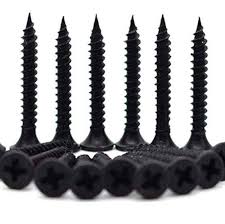
In UAE construction, drywall screws are essential for interior partition walls, ceiling installations, and creating false ceilings in commercial and residential buildings. Their fine threads and sharp points make them ideal for securing gypsum boards to metal studs, which are commonly used in modern construction due to their durability and fire resistance. The bugle head design prevents paper tearing and ensures flush installation, while the black phosphate coating provides adequate corrosion protection for indoor applications.

Wood Screws: Primary Applications

Wood screws find extensive use in furniture assembly, wooden framework construction, door and window installations, and outdoor wooden structures. Their coarse threads provide excellent grip in wood fibers, while the tapered design helps prevent wood splitting. In UAE’s humid coastal areas, stainless steel or heavily coated wood screws are preferred for outdoor applications to withstand corrosion from salt air and high humidity.

Critical Differences That Matter

The thread pitch represents the most significant difference – drywall screws have fine threads spaced closely together, while wood screws feature coarse threads with wider spacing. Drywall screws typically have a sharper point for easier penetration into drywall and studs, whereas wood screws may have a slightly blunter point to prevent wood splitting. Head types also differ, with drywall screws featuring bugle heads and wood screws offering various head styles including flat, round, and pan heads.

Material strength requirements vary significantly. Drywall screws are designed to be brittle to prevent over-tightening and drywall damage, while wood screws need greater shear strength for structural applications. According to construction experts at Construction Week Online, using the wrong screw type can reduce holding strength by up to 60% and significantly compromise structural integrity.

Choosing the Right Supplier in Dubai

When selecting a hardware supplier in Dubai, consider their product range, quality certifications, industry experience, and technical support capabilities. Look for suppliers who understand local construction requirements and can provide guidance on the appropriate screw types for specific applications. Quality assurance, timely delivery, and competitive pricing are also crucial factors that can impact your project’s success and profitability.

Trust OMAN OCEAN TRADING LLC for Your Construction Hardware Needs

For hardware shopkeepers and construction professionals seeking reliable hardware solutions in Dubai, OMAN OCEAN TRADING LLC stands as a trusted partner with decades of industry experience. Located at 103, Lily Center, Deira DUBAI, they have built a reputation for quality and reliability in the competitive UAE construction market.

OMAN OCEAN TRADING LLC specializes in a comprehensive range of construction hardware, including Dowel Bars, Anchor Bolts, Stud Bolts, and Threaded Bolts – all essential components for modern construction projects. Their extensive product knowledge and commitment to quality ensure that customers receive the right products for their specific applications, backed by technical expertise and reliable service.

With their user-friendly website at omanocean.com, customers can easily browse their product catalog, access technical specifications, and make informed purchasing decisions. Their team of experienced professionals understands the unique demands of the UAE construction industry and provides personalized service to meet each client’s specific requirements.

Call Now

Leave a Reply

Your email address will not be published. Required fields are marked *