
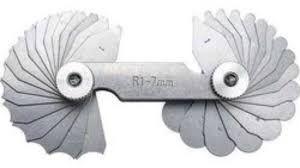
Are you tired of costly measurement errors that delay your construction projects and eat into your profits? In the fast-paced world of UAE construction, where precision is everything, choosing the right pitch gauge system can make or break your project timeline and budget.
The solution lies in understanding the fundamental differences between metric and imperial pitch gauges. As hardware professionals and construction experts in Dubai’s booming market, we face this critical decision daily. The choice between these two measurement systems impacts everything from material procurement to international project specifications.
Also read – Ultimate Guide: Lakdawala Trading Dubai Delivers Top Height Gauges for Construction Pros
Understanding the Core Differences
Metric pitch gauges operate on the decimal system, measuring thread pitch in millimeters between adjacent thread crests. This system, used by over 95% of the world’s population, offers straightforward calculations and compatibility with international standards. Imperial gauges, conversely, measure threads per inch (TPI), requiring more complex fractional calculations but remaining essential for American and legacy equipment specifications.
In UAE construction, where projects often involve international teams and materials sourced globally, understanding both systems becomes crucial. Major infrastructure projects like the Burj Khalifa and Dubai Metro required seamless integration of both metric and imperial components, making dual-system proficiency a valuable skill for local contractors.
How Pitch Gauges Are Made: From Raw Material to Finished Product
Raw Material(s): High-quality pitch gauges typically start with hardened tool steel or stainless steel as primary materials. Premium manufacturers may use corrosion-resistant alloys like 420 stainless steel or carbon steel with protective coatings for enhanced durability in harsh construction environments.
Manufacturing Process: The production begins with precision blanking of steel sheets using CNC laser cutting or stamping presses. Each gauge blade undergoes meticulous grinding to achieve exact thickness and smooth edges. The critical thread profiles are then precision-machined using specialized thread milling equipment or EDM (Electrical Discharge Machining) for absolute accuracy. Heat treatment follows, hardening the steel to withstand repeated use. Finally, markings are laser-etched for permanent legibility, and protective coatings are applied.
Key Properties Derived from Manufacturing: The heat treatment process imparts essential hardness (typically HRC 58-62), ensuring the gauges resist wear from frequent use. Precision machining guarantees dimensional accuracy within ±0.01mm, while surface treatments provide corrosion resistance crucial for UAE’s humid coastal environment.
Quality Control: Each gauge undergoes rigorous testing including optical comparator verification of thread angles, coordinate measuring machine (CMM) checks for dimensional accuracy, and go/no-go functional testing against master thread sets. Compliance with ISO 6789 standards ensures international recognition and reliability.
Essential Uses in the UAE Construction Landscape
Primary Application(s): Pitch gauges serve critical roles in mechanical systems installation across UAE’s construction sector. They verify thread compatibility in structural steel connections, plumbing systems, HVAC installations, and elevator mechanisms. With Dubai’s emphasis on high-rise construction, proper thread verification ensures structural integrity in tension systems and prevents catastrophic failures.
According to the Dubai Department of Economic Development, construction projects worth AED 34.5 billion required precise thread measurement systems in 2023 alone. The ability to accurately identify and verify both metric and imperial threads has become a mandatory skill for quality assurance teams on major projects.
Choosing the Right System for Your Projects
For new construction projects in the UAE, metric gauges dominate due to alignment with European and Asian material suppliers. However, maintenance and renovation work often requires imperial gauges for compatibility with existing American-made equipment. Smart contractors maintain comprehensive sets of both systems, with digital pitch gauges gaining popularity for their dual-system capabilities and reduced human error.
The trend toward metric standardization continues across the GCC, but the region’s diverse international partnerships ensure both systems remain relevant. Contractors working on joint ventures with American firms particularly benefit from maintaining imperial gauge capabilities alongside their metric sets.
Trusted Supplier for Construction Professionals
For over two decades, Lakdawala Trading Co. LLC has been the go-to supplier for construction professionals in Dubai seeking reliable measurement tools. Located in the heart of Naif Deria, their extensive experience serving contractors and builders has made them a trusted name in the industry.
What sets Lakdawala Trading apart is their specialized expertise in precision tools including Cutting Discs, Measuring Tapes, Hole Saws, and Carbide Inserts. Their pitch gauge selection features both metric and imperial systems from leading international manufacturers, ensuring accuracy and durability for the most demanding construction environments.
The company’s commitment to quality is matched by their deep understanding of UAE construction requirements. Their team provides expert guidance on selecting the right gauge system for specific project needs, helping contractors avoid costly measurement errors and project delays.
Visit their website at https://www.lakdawalatrading.com/ to explore their comprehensive range of construction tools and measurement instruments.