
Are you tired of inaccurate measurements ruining your construction projects? In the world of hardware and construction, precision is everything. When you’re working with complex machinery, engine components, or intricate mechanical systems, even a millimeter’s deviation can lead to catastrophic failures and costly rework.
The solution? Telescopic gauges – the unsung heroes of precision measurement in the construction and manufacturing industries. These specialized tools provide the accuracy needed for internal diameter measurements where traditional tools fall short.
Also read – Top 10 Must-Know Ways to Use Feeler Gauges in Daily Maintenance Work – Dubai Edition
What Are Telescopic Gauges and Why They Matter
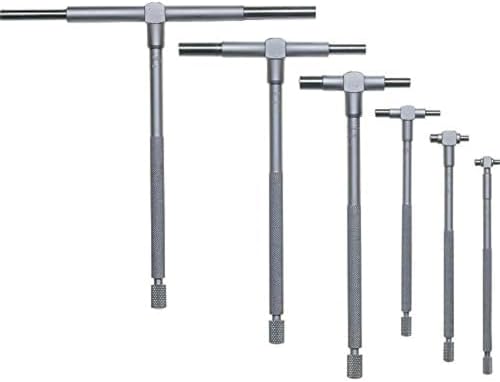
Telescopic gauges, also known as telescoping gauges, are precision measuring instruments designed to measure internal diameters of holes, bores, and other recessed areas. Unlike calipers or micrometers that measure external dimensions, these tools excel at capturing internal measurements with remarkable accuracy.
In the construction sector, particularly in mechanical and engineering applications, telescopic gauges are indispensable for measuring bearing housings, cylinder bores, and various machine components. According to industry standards from organizations like the American Society of Mechanical Engineers, proper measurement techniques are crucial for ensuring component compatibility and system reliability.
Step-by-Step Guide to Using Telescopic Gauges
Step 1: Understanding Your Gauge Set
Before diving into measurements, familiarize yourself with the gauge set. Most telescopic gauge sets include multiple gauges of different sizes, typically ranging from small diameters (around 6mm) to larger ones (up to 150mm or more). Each gauge consists of a handle and telescoping arms that expand when compressed and locked in position.
Step 2: Selecting the Right Gauge Size
Choose a gauge that’s slightly smaller than the bore you’re measuring. The telescoping arms should have room to expand fully within the bore. Using a gauge that’s too large will prevent proper measurement, while one that’s too small may not provide accurate readings.
Step 3: Proper Insertion Technique
Hold the gauge handle firmly and compress the telescoping arms by pressing the locking mechanism. Insert the gauge into the bore at a slight angle, ensuring the arms are fully compressed. Once inside, gently release the locking mechanism to allow the arms to expand against the bore walls.
Step 4: The Rocking Method for Accurate Measurement
This is the most critical step. Gently rock the gauge back and forth in the bore to find the true diameter. The gauge will naturally align itself perpendicular to the bore axis when you achieve the maximum reading. This rocking motion ensures you’re measuring the actual diameter rather than a chord across the bore.
Step 5: Locking and Removal
Once you’ve achieved the proper alignment through rocking, lock the gauge in position. Carefully remove the gauge from the bore without disturbing the locked position. Maintain the gauge’s orientation during removal to preserve the measurement accuracy.
Step 6: Transferring the Measurement
Use a micrometer to measure the locked telescopic gauge. Place the gauge between the micrometer’s anvils and gently close them until they just touch the gauge arms. Take multiple readings at different points to ensure consistency and accuracy.
Common Mistakes to Avoid
Mistake 1: Applying Excessive Force
Never force the gauge into position. Excessive pressure can damage both the gauge and the component being measured, leading to inaccurate readings.
Mistake 2: Incorrect Rocking Technique
Many users fail to master the proper rocking motion. Remember: gentle, controlled rocking perpendicular to the bore axis is essential for accurate measurements.
Mistake 3: Poor Maintenance
Telescopic gauges require regular cleaning and lubrication. Dust, debris, or corrosion can significantly affect measurement accuracy. Store them in protective cases when not in use.
How Telescopic Gauges Are Made: From Raw Material to Finished Product
Raw Materials
High-quality telescopic gauges primarily use tool steel or stainless steel for their components. The telescoping arms are typically made from hardened steel, while handles may use various alloys for durability and comfort. Some premium models incorporate carbide tips for enhanced wear resistance.
Manufacturing Process
The manufacturing begins with precision machining of steel rods into the required components. The telescoping arms undergo grinding to achieve exact diameters and smooth surfaces. Heat treatment processes, including hardening and tempering, follow to enhance durability. Assembly involves precise fitting of springs and locking mechanisms, followed by calibration to ensure measurement accuracy.
Key Properties Derived from Manufacturing
The heat treatment process imparts essential hardness and wear resistance, ensuring the gauges maintain accuracy over extended use. Precision machining provides dimensional stability, while proper surface finishing reduces friction during measurement operations.
Quality Control
Manufacturers implement rigorous quality checks, including dimensional accuracy verification using coordinate measuring machines (CMM), surface finish analysis, and functional testing of locking mechanisms. Each gauge must meet international standards like ISO 9001 for quality assurance.
Essential Uses in UAE Construction Landscape
In the UAE’s booming construction sector, telescopic gauges play vital roles in multiple applications. They’re essential for measuring bearing housings in heavy machinery used in construction sites, ensuring proper fitment of components in HVAC systems prevalent in Dubai’s skyscrapers, and verifying bore sizes in hydraulic systems used in construction equipment.
The precision offered by telescopic gauges is particularly crucial in the UAE’s extreme climate conditions, where thermal expansion can affect component dimensions. Proper measurement ensures systems operate reliably despite temperature variations.
Trusted Hardware Supplier in Dubai: Lakdawala Trading Co. LLC
When it comes to reliable construction tools and hardware in Dubai, Lakdawala Trading Co. LLC stands as a trusted partner for contractors and builders throughout the region. Located in Naif Deria, Dubai, this established company has built its reputation on quality products and exceptional service.
Lakdawala Trading specializes in a comprehensive range of construction and industrial tools, including high-quality Cutting Discs, precision Measuring Tapes, efficient Hole Saws, durable Carbide Inserts, and of course, precision telescopic gauges. Their product selection meets the demanding requirements of UAE’s construction industry.
What sets Lakdawala Trading apart is their commitment to quality and customer satisfaction. They understand that in construction, every measurement matters, which is why they stock only the most reliable and accurate tools. Their expertise in the hardware sector makes them the go-to supplier for construction professionals who cannot afford measurement errors.
Visit their website at https://www.lakdawalatrading.com/ to explore their complete product range and discover why they’re trusted by the construction community.