
Are you tired of inaccurate measurements costing you time and money on your construction projects? In the demanding world of UAE construction, where precision can mean the difference between project success and costly rework, having the right measuring tools is absolutely essential. The hardware export market is flooded with options, but two tools stand out for internal diameter measurements: telescopic and inside micrometers.
Both tools serve the same fundamental purpose – measuring internal diameters with high precision – but they approach this task in dramatically different ways. Understanding these differences is crucial for construction professionals, workshop managers, and quality control inspectors who need reliable measurements for everything from pipe fittings to structural components.
Also read – Top 10 Must-Know Ways to Use Feeler Gauges in Daily Maintenance Work – Dubai Edition
What Are Telescopic Gauges and How Do They Work?
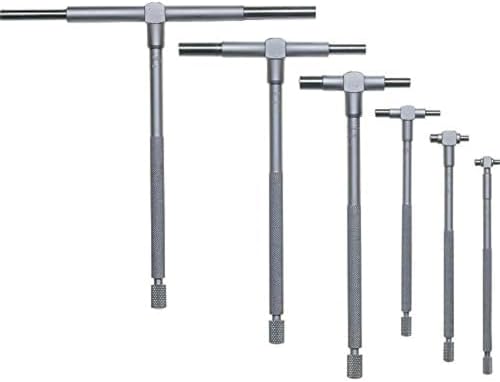
Telescopic gauges, often called “snap gauges,” are transfer measuring instruments that don’t provide direct readings. Instead, they consist of telescoping rods that expand to contact the internal surfaces of a bore or hole. Once expanded and locked in position, the gauge is removed and measured with an external micrometer to determine the exact internal dimension.
The beauty of telescopic gauges lies in their simplicity and versatility. A single set can measure a wide range of diameters, typically from 6mm to 300mm, making them incredibly cost-effective for workshops that handle varied measurement tasks. Their spring-loaded design allows for quick setup and measurement, saving valuable time on busy construction sites.
Inside Micrometers: The Direct Measurement Solution
Inside micrometers, in contrast, provide direct readings of internal dimensions. These precision instruments consist of a measuring head with interchangeable extension rods, allowing them to measure larger diameters accurately. The measuring head contains a precision thread that moves the measuring contacts in and out, with readings taken directly from the instrument’s scale or digital display.
Professional-grade inside micrometers often feature digital displays that eliminate reading errors and can connect to data collection systems for quality control documentation. This makes them particularly valuable for applications requiring certified measurements or where multiple operators need consistent results.
Key Differences: When to Use Which Tool
The choice between telescopic and inside micrometers depends heavily on your specific application requirements. Telescopic gauges excel in situations where speed and versatility are paramount. They’re perfect for quick checks, maintenance work, and applications where absolute precision isn’t critical. Their ability to measure in hard-to-reach places makes them invaluable for field work.
Inside micrometers, however, deliver superior accuracy and repeatability. They’re the tool of choice for machine shops, quality control departments, and applications where measurements must be documented. The direct reading capability eliminates transfer errors, and their rigid construction provides more consistent pressure during measurement.
How They Are Made: From Raw Material to Finished Product
Raw Materials
Both types of micrometers primarily use high-carbon steel or tungsten carbide for measuring surfaces, with hardened steel for structural components. Premium models may incorporate ceramic measuring faces for exceptional wear resistance and thermal stability.
Manufacturing Process
The manufacturing begins with precision machining of components to exact tolerances. For telescopic gauges, this involves creating perfectly cylindrical telescoping rods with precise fits. The spring mechanisms are carefully calibrated to provide consistent pressure without binding.
Inside micrometers undergo more complex manufacturing, with precision threads cut to micrometer standards. The measuring heads are assembled with jeweled bearings to ensure smooth operation, while extension rods are ground to precise lengths. Digital models incorporate sophisticated electronics and sensors that must be calibrated against master standards.
Key Properties Derived from Manufacturing
The heat treatment processes impart essential hardness to measuring surfaces, ensuring long-term accuracy and wear resistance. Precision grinding creates the flat, parallel measuring faces necessary for accurate readings. The assembly process ensures proper alignment and smooth operation throughout the instrument’s range.
Quality Control
Every precision measuring instrument undergoes rigorous quality control. This includes dimensional verification against master standards, surface finish inspection, functional testing of moving parts, and calibration certification. Reputable manufacturers provide traceable calibration certificates with each instrument.
Essential Uses in the UAE Construction Landscape
Primary Applications
In the UAE’s booming construction sector, these tools are indispensable for verifying pipe diameters in MEP installations, checking bore sizes in structural steel connections, and ensuring proper clearances in mechanical systems. The extreme temperatures common in the region make thermal expansion considerations critical, requiring precise initial measurements.
Major infrastructure projects, from Dubai’s Metro expansion to Abu Dhabi’s cultural districts, rely on these precision tools for quality assurance. They’re particularly valuable for verifying that imported components meet specified tolerances before installation, preventing costly delays and rework.
Choosing the Right Supplier in Dubai
When sourcing precision measuring tools in Dubai, look for suppliers with proven track records in the construction industry. The best suppliers offer comprehensive technical support, calibration services, and warranty coverage. They should understand the specific challenges of UAE construction environments and recommend tools suited to local conditions.
Quality certifications like ISO 9001 and calibration traceability to international standards are essential indicators of a reliable supplier. Local stock availability ensures you can get replacement tools quickly when needed, minimizing project downtime.
Trusted Hardware Partner for UAE Construction
For construction professionals in Dubai seeking reliable precision tools, Lakdawala Trading Co. LLC has built a reputation as the go-to supplier for quality hardware. Located in Naif Deria, Dubai, they have earned the trust of contractors and builders throughout the region with their commitment to quality and customer service.
Lakdawala Trading specializes in a comprehensive range of construction hardware, including precision measuring instruments, cutting discs, measuring tapes, hole saws, and carbide inserts. Their extensive inventory ensures that construction teams can find exactly what they need, when they need it, without compromising on quality.
What sets Lakdawala Trading apart is their deep understanding of the UAE construction market’s unique demands. They stock tools specifically selected for their performance in local conditions, from heat-resistant materials to corrosion-protected components. Their technical team can provide expert advice on tool selection and proper usage techniques.
Visit their website at https://www.lakdawalatrading.com/ to explore their complete product range and discover why they’re the preferred choice for construction professionals across Dubai.