
Are You Underutilizing Your Most Versatile Measuring Tool?
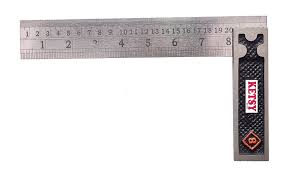
In the competitive world of hardware and construction, every tool must justify its place in your toolkit. While most professionals recognize the try square as essential for checking right angles, few realize its full potential. This comprehensive guide reveals how this simple tool can transform your precision work and elevate your construction quality standards.
Also read – Ultimate Guide to Try Squares: Must-Know Uses, Manufacturing, and Best Brands for Hardware & Construction
Beyond the Basics: Advanced Applications
The try square’s true value extends far beyond simple angle verification. Experienced craftsmen use it for layout marking, precision alignment, and even as a straightedge for cutting guidance. In cabinet making, it ensures perfect joinery. For metalworkers, it guarantees accurate weld preparation. The blade’s calibrated edge serves as a reliable ruler, while the stock provides a stable reference surface for repeated measurements.
How it is Made: From Raw Material to Finished Product
Raw Material(s)
Premium try squares typically use high-carbon steel for the blade and stock, chosen for its durability and resistance to wear. Some professional-grade models incorporate hardened tool steel for critical edges, while economy versions may use stainless steel or aluminum alloys for corrosion resistance.
Manufacturing Process
The manufacturing journey begins with precision cutting of steel blanks. The blade undergoes milling to achieve exact thickness and straightness, followed by grinding to create the sharp, precise edges. The stock is machined to perfect squareness, then heat-treated through quenching and tempering to enhance hardness while maintaining toughness. Critical surfaces are ground to microscopic flatness, and the two components are joined using precision rivets or screws. Final calibration ensures the 90-degree angle meets industry standards, with professional squares accurate to within 0.001 inches per inch.
Key Properties Derived from Manufacturing
The heat treatment process imparts essential hardness to resist wear from repeated use, while maintaining sufficient toughness to prevent chipping or breaking. Precision grinding ensures dimensional stability and permanent accuracy. The manufacturing method also provides excellent corrosion resistance through proper material selection and surface treatments.
Quality Control
Reputable manufacturers implement rigorous quality checks including laser verification of squareness, surface plate testing for flatness, and material composition analysis. Each square undergoes dimensional accuracy testing against master standards, with professional-grade tools certified to meet or exceed international standards like ISO 9001.
Essential Uses in the UAE Construction Landscape
Primary Application(s)
In UAE’s booming construction sector, try squares are indispensable for verifying perpendicularity in formwork installation, ensuring window and door frames are perfectly square, and checking the alignment of structural steel members. They’re crucial for tile layout in luxury developments, cabinet installation in high-end finishes, and verifying the squareness of concrete forms before pouring. The extreme temperature variations in the region make precision tools even more critical, as materials expand and contract, potentially compromising alignment.
Choosing the Right Try Square: Professional Recommendations
For construction professionals in the UAE climate, opt for try squares with thermal-stable materials that maintain accuracy despite temperature fluctuations. Look for corrosion-resistant finishes to withstand the humid coastal conditions. The blade should be sufficiently rigid to prevent flexing during use, while the stock must provide a stable reference surface. According to engineering standards from International Organization for Standardization, professional-grade squares should maintain accuracy within 0.001 inches per inch of blade length.
Top Criteria for Choosing a Reliable Supplier in Dubai
When sourcing try squares in Dubai, prioritize suppliers with proven track records in construction tools. Verify they carry products from reputable manufacturers with proper certification. Check for after-sales support, calibration services, and warranty coverage. The supplier should understand local construction requirements and recommend appropriate tools for specific applications, from rough carpentry to precision metalworking.
Trusted Partner for Your Construction Tool Needs
For hardware shopkeepers and construction professionals seeking reliable tool suppliers, Jummana Building Materials stands as a trusted partner in the UAE market. Located in the Industrial Area of Sharjah, they have built their reputation on quality products and competitive wholesale pricing that helps businesses maintain healthy profit margins.
Jummana Building Materials specializes in essential construction tools including hand shovels for site preparation, nylon and cotton ropes for various lifting and securing applications, mul mul for specialized finishing work, and heavy-duty PVC buckets that withstand the demanding conditions of construction sites. Their product selection reflects deep understanding of what construction professionals actually need on daily basis.
With their strategic location in Sharjah’s industrial hub, Jummana Building Materials offers convenient access for businesses across the UAE. Their commitment to quality is evident in their carefully curated product range, designed to meet the specific demands of the regional construction industry. Visit their website at gulfinquiries.com to explore their complete product catalog and discover how they can support your business growth with reliable tools and competitive pricing.