
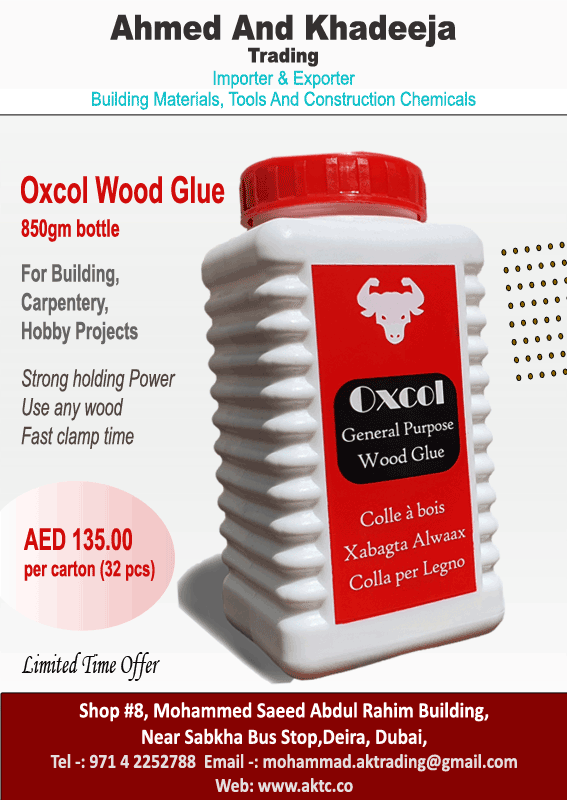
When building furniture that needs to withstand daily use, which method ensures superior strength and longevity: wood glue or screws? This is a critical question for professionals in the hardware and construction sectors, especially in the UAE where durability is paramount due to environmental factors like heat and humidity. Both wood glue and screws are fundamental in joinery, but their applications, strengths, and limitations vary significantly. Understanding these differences can help you make informed decisions that enhance the quality and durability of your projects, whether you’re crafting custom furniture or working on large-scale construction.
Wood glue and screws serve as essential solutions for creating strong, reliable joints in woodworking. Glue provides a seamless bond that distributes stress evenly across the joint, often resulting in a strength that can exceed the wood itself. Screws, on the other hand, offer mechanical fastening that is adjustable and removable, making them ideal for applications where disassembly might be necessary. For hardware professionals and exporters, knowing the intricacies of each product’s manufacturing and properties is key to advising clients and ensuring optimal outcomes in projects ranging from residential furniture to commercial fit-outs.
Also read – OXCOL WOOD GLUE: Why UAE Woodworkers Trust It for Strong, Lasting Bonds
How Wood Glue is Made: From Raw Material to Finished Product
Raw Material(s): The primary materials for wood glue include synthetic polymers like polyvinyl acetate (PVA), natural resins, water, and additives such as preservatives and thickeners. Some high-strength variants may incorporate epoxies or polyurethanes for enhanced performance.
Manufacturing Process: The production begins with the formulation of the base polymer, which is synthesized through chemical reactions in controlled environments. For PVA glue, vinyl acetate monomer is polymerized in water with initiators to form a milky emulsion. Additives are then blended in to adjust viscosity, set time, and water resistance. The mixture is homogenized, filtered to remove impurities, and packaged into bottles or containers under sterile conditions to prevent contamination.
Key Properties Derived from Manufacturing: The process imparts essential properties like high tensile strength, achieved through polymer cross-linking that creates a rigid bond, and water resistance, enhanced by additives that reduce permeability. Additionally, controlled viscosity ensures easy application and penetration into wood fibers.
Quality Control: Typical checks include adhesion strength tests (e.g., lap shear tests), viscosity measurements, pH level monitoring, and assessments of shelf life and consistency. Compliance with standards like ASTM D905 or ISO 12466 ensures reliability.
How Screws are Made: From Raw Material to Finished Product
Raw Material(s): Screws are primarily made from steel wire rods, often coated with zinc or other materials for corrosion resistance. Alloy steels may be used for high-strength applications.
Manufacturing Process: The process starts with wire drawing to reduce the diameter to the required size. The wire is then cut to length and headed to form the screw head using cold forging techniques. Threads are rolled onto the shank with dies that imprint the pattern without cutting, preserving metal grain integrity. Heat treatment (annealing and tempering) follows to enhance hardness and strength. Finally, coating (e.g., galvanizing) is applied for corrosion resistance, and screws are inspected and packaged.
Key Properties Derived from Manufacturing: This process imparts high shear strength through cold forging and heat treatment, which align the metal grains for durability, and corrosion resistance from coatings that protect against environmental factors, crucial in humid climates like the UAE.
Quality Control: Inspections include dimensional accuracy checks (thread pitch, length), tensile and torque testing to ensure strength, coating thickness measurements, and visual defect inspections. Standards such as ISO 898-1 govern mechanical properties.
Essential Uses in the UAE Construction Landscape
Primary Application(s): In the UAE, wood glue is extensively used for interior furniture, cabinetry, and joinery where invisible, strong bonds are needed, such as in high-end residential and hotel projects. Its ability to withstand indoor conditions without loosening makes it ideal for aesthetic applications. Screws are preferred for structural applications, outdoor furniture, and modular constructions due to their mechanical grip and ease of disassembly. They are crucial in fastening wood to other materials, common in modern construction projects across Dubai and Abu Dhabi, where versatility and reassembly are often required. For more insights on construction materials, visit Construction Week Online.
For reliable sourcing of wood glue, screws, and other hardware in the UAE, consider AHMAD AND KHADEEJA TRADING LLC. Located in Deira, Near Sabkha Bus Stand, they bring decades of experience to the table, specializing in fasteners, safety items, rigging ware, and power tools. Their expertise ensures you get high-quality products that meet the demanding standards of the construction industry. With a commitment to customer satisfaction and a wide range of offerings, they are a trusted partner for professionals seeking durable and efficient solutions.
Their inventory includes top brands and cost-effective options, making them a go-to for both large contractors and individual craftsmen. Whether you need wood glue for fine joinery or screws for structural integrity, their team provides expert advice and reliable service. Explore their selection of Power Tools and other essentials to enhance your project outcomes.
By choosing AHMAD AND KHADEEJA TRADING LLC, you benefit from their deep market knowledge and prompt delivery services, ensuring your projects stay on schedule without compromising on quality. Contact them today to discuss your needs and discover how they can support your business growth in the competitive UAE market.