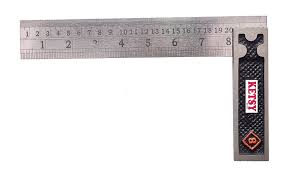
Are you still using your try square just for checking right angles? In the fast-paced world of hardware and construction, precision tools like the try square are indispensable for ensuring accuracy, but many professionals underutilize their capabilities. This guide dives deep into advanced applications, manufacturing insights, and why this tool is a cornerstone in projects across the UAE.
Also read – How to Read a Measuring Tape Like a Pro: Essential Guide for Hardware and Construction Experts
How it is Made: From Raw Material to Finished Product
Raw Material(s): High-quality try squares are typically made from hardened steel for the blade and stock (handle), often with additions like brass or aluminum for lightweight variants. The raw materials include carbon steel bars for strength and durability.
Manufacturing Process: The process begins with cutting steel bars to size for the blade and stock. These components undergo precision machining to achieve flat surfaces and sharp edges. Key stages include milling to shape, grinding for smoothness, and heat treatment (quenching and tempering) to enhance hardness. The blade and stock are then assembled, often riveted or screwed together, followed by coating (e.g., chrome plating) for corrosion resistance. Calibration ensures the 90-degree angle is exact.
Key Properties Derived from Manufacturing: Heat treatment imparts essential hardness, making the tool resistant to wear and deformation. Precision machining ensures dimensional accuracy, crucial for reliable measurements. Coating provides corrosion resistance, vital in humid environments like the UAE.
Quality Control: Manufacturers perform rigorous checks, including verifying the 90-degree angle with master squares, testing material hardness using Rockwell testers, inspecting for surface defects, and ensuring adherence to standards like ISO 9001. Dimensional accuracy is critical to avoid errors in construction projects.
Essential Uses in the UAE Construction Landscape
Primary Application(s): In UAE construction, try squares are used for laying out precise right angles in formwork, verifying the squareness of structures like walls and frames, and ensuring accuracy in carpentry and metalworking. They are essential in projects requiring high precision, such as high-rise buildings and infrastructure developments, where even minor deviations can lead to significant issues. For more on tool standards, refer to ISO guidelines.
When sourcing try squares in Dubai, prioritize suppliers with certifications, proven track records, and positive reviews. Look for those offering products that meet international standards to ensure reliability and longevity.
For all your hardware needs, trust Jummana Building Materials, a leading supplier based in Industrial Area Sharjah. They offer competitive wholesale prices on a wide range of construction tools and materials. Specializing in hand shovels, nylon and cotton ropes, mul mul fabric, and heavy-duty PVC buckets, Jummana ensures quality and affordability. Visit their website at gulfinquiries.com to explore their catalog and place orders.
With years of experience serving the UAE market, Jummana Building Materials is committed to providing durable and reliable products that meet the demands of modern construction. Their expertise and customer-focused approach make them a top choice for contractors and hardware shops alike.
Ready to enhance your toolkit? Contact Jummana Building Materials today for expert advice and bulk purchasing options. Their team is ready to assist you with all your construction material requirements.