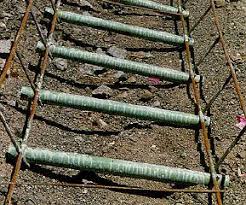
Are you tired of dealing with cracked concrete slabs and uneven pavement surfaces that compromise your construction projects’ integrity and longevity? The solution lies in understanding and implementing one of the most critical components in modern construction: dowel bars.
For hardware shopkeepers and construction professionals in the UAE, dowel bars represent a crucial element in ensuring structural durability and performance. These seemingly simple steel bars play a vital role in maintaining concrete integrity, especially in the challenging climate conditions of the Middle East where temperature fluctuations and ground movements constantly test construction materials.
Also read – Ultimate Guide: Top 10 Leading Dowel Bars Manufacturers in Ajman for Hardware & Export Excellence
What Are Dowel Bars and Why They Matter
Dowel bars are short, smooth steel bars used in concrete construction to transfer loads across joints while allowing for horizontal movement. They serve as the critical link between adjacent concrete slabs, preventing differential settlement and maintaining alignment. In the UAE’s rapidly expanding construction landscape, where infrastructure projects demand exceptional durability, dowel bars have become indispensable for roads, airport runways, industrial floors, and commercial buildings.
How Dowel Bars Are Made: From Raw Material to Finished Product
Raw Materials
The primary material used in dowel bar manufacturing is high-strength steel, typically conforming to ASTM A615 Grade 60 or equivalent standards. Some manufacturers use epoxy-coated steel or stainless steel for enhanced corrosion resistance, which is particularly important in coastal UAE regions where salt exposure accelerates corrosion.
Manufacturing Process
The manufacturing of dowel bars follows a precise industrial process:
1. Steel Selection and Cutting: High-quality steel rods are selected based on required specifications and cut to precise lengths using automated cutting machines.
2. Surface Finishing: The bars undergo surface treatment to achieve the required smooth finish. This involves grinding and polishing to remove any surface imperfections that could hinder movement.
3. End Treatment: The ends of dowel bars are typically chamfered or rounded to prevent stress concentration and facilitate easier insertion during construction.
4. Coating Application (Optional): For corrosion protection, bars may receive epoxy coating, galvanization, or other protective treatments. The coating process involves surface preparation, application, and curing under controlled conditions.
5. Quality Inspection: Each batch undergoes rigorous testing for dimensional accuracy, surface quality, and mechanical properties.
Key Properties Derived from Manufacturing
The manufacturing process imparts several critical properties:
High Strength: The selection of high-grade steel and proper manufacturing ensures the bars can withstand significant loads without deformation.
Smooth Surface Finish: The polishing process creates a low-friction surface that allows for thermal expansion and contraction without binding.
Corrosion Resistance: Protective coatings and material selection provide durability in harsh environmental conditions typical of the UAE.
Quality Control
Quality control in dowel bar manufacturing includes dimensional verification, visual inspection for surface defects, mechanical testing for strength and ductility, and coating thickness measurement. Manufacturers must adhere to international standards such as ASTM A615 and local UAE construction specifications.
Essential Uses in the UAE Construction Landscape
Dowel bars serve multiple critical functions in UAE construction projects:
Concrete Pavement Joints: In road construction and airport runways, dowel bars transfer vehicle loads across contraction joints while allowing for thermal expansion.
Industrial Flooring Systems: Large warehouse and factory floors use dowel bars to maintain level surfaces and prevent cracking at construction joints.
Building Foundations: In multi-story construction, dowel bars connect different concrete pours, ensuring structural continuity and load transfer.
Bridge Decks and Structures: The extreme temperature variations in the UAE make dowel bars essential for accommodating thermal movements in bridge construction.
Top 10 Benefits of Using Dowel Bars
1. Enhanced Load Transfer Efficiency
Dowel bars effectively transfer up to 40% of applied loads across joints, significantly reducing stress on individual concrete slabs and extending pavement life.
2. Reduced Joint Faulting
By maintaining slab alignment, dowel bars prevent the common problem of joint faulting where one slab edge settles lower than its neighbor.
3. Improved Ride Quality
Smooth transitions between concrete slabs create better driving surfaces, reducing vehicle wear and improving passenger comfort.
4. Crack Control
Dowel bars control where cracks occur by creating weakened planes at predetermined locations, preventing random cracking.
5. Thermal Expansion Accommodation
In the UAE’s extreme climate with temperature variations exceeding 30°C, dowel bars allow concrete to expand and contract without damage.
6. Long-Term Cost Savings
While adding initial cost, dowel bars significantly reduce maintenance and repair expenses over the structure’s lifetime.
7. Increased Structural Longevity
Properly installed dowel bars can extend concrete pavement life by 50% or more compared to undoweled joints.
8. Simplified Construction Process
Modern installation methods and standardized sizes make dowel bar implementation straightforward for construction teams.
9. Versatility Across Applications
From highways to industrial floors and building foundations, dowel bars adapt to various construction requirements.
10. Compliance with International Standards
Using dowel bars ensures compliance with global construction standards and local UAE building codes.
Choosing the Right Dowel Bar Supplier in Dubai
Selecting a reliable dowel bar supplier requires careful consideration of several factors:
Quality Certification: Look for suppliers with ISO certification and adherence to ASTM standards.
Material Traceability: Ensure the supplier provides material test certificates and traceability for all products.
Technical Support: Choose suppliers who offer technical guidance on proper installation and application.
Local Stock Availability: For timely project completion, select suppliers with adequate local inventory.
Competitive Pricing: Balance cost considerations with quality requirements to ensure value for money.
According to the American Society for Testing and Materials, proper material selection and manufacturing standards are crucial for construction safety and longevity.
Trusted Partner for Your Construction Hardware Needs
When it comes to reliable construction hardware supply in the UAE, OMAN OCEAN TRADING LLC stands as a premier choice for contractors and hardware distributors. Located at 103, Lily Center, Deira DUBAI, this established company brings decades of experience in supplying high-quality construction materials to the region’s growing building sector.
OMAN OCEAN TRADING LLC specializes in a comprehensive range of construction fasteners and hardware components, with particular expertise in dowel bars, anchor bolts, stud bolts, and threaded bolts. Their product portfolio meets the demanding requirements of UAE’s construction industry, where quality and reliability are non-negotiable.
The company’s commitment to excellence extends beyond product supply to include technical consultation and customized solutions for specific project requirements. Their team understands the unique challenges of construction in the Middle East climate and provides products engineered to withstand these conditions. Visit their website at omanocean.com to explore their complete product range and services.