In the competitive world of hardware export and construction supply, have you ever wondered why some structural failures occur despite using what appears to be identical fasteners? The answer often lies in understanding load capacity specifications and manufacturing quality.
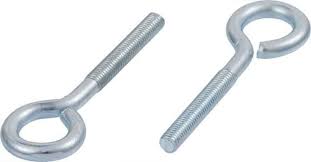
Hook bolts represent a critical component in construction hardware that demands precise selection based on load-bearing requirements. For hardware shopkeepers and construction professionals, choosing the right hook bolt isn’t just about availability—it’s about safety, reliability, and building trust with your clients.
Also read – Essential Hook Bolt Sizes for Hanging Pots on UAE Terraces: A Hardware & Export Guide
How Hook Bolts Are Made: From Raw Material to Finished Product
Raw Materials
The foundation of any quality hook bolt begins with premium raw materials. Most high-performance hook bolts use medium carbon steel (grades 1045 or 1050), stainless steel (304 or 316 grades for corrosion resistance), or alloy steel. The choice of material directly impacts the final load capacity and durability.
Manufacturing Process
The manufacturing journey transforms raw steel into precision-engineered hook bolts through several critical stages:
Wire Drawing: Steel rods are drawn through progressively smaller dies to achieve the required diameter with improved tensile strength.
Cold Forging: The wire is cut to length and cold-forged into the basic hook and bolt shape. This process work-hardens the steel, enhancing its mechanical properties.
Thread Rolling: Threads are formed through a cold-forming process where the blank is pressed between two dies, creating stronger threads than cutting methods.
Heat Treatment: For high-strength applications, hook bolts undergo quenching and tempering to achieve specific hardness and strength levels.
Surface Treatment: Final coatings include zinc plating, hot-dip galvanizing, or specialized coatings for corrosion protection.
Key Properties Derived from Manufacturing
The manufacturing process directly determines two critical properties:
Tensile Strength: Cold forging and heat treatment significantly increase the material’s ability to withstand pulling forces without breaking. Properly manufactured hook bolts can achieve tensile strengths exceeding 100,000 psi.
Ductility and Toughness: The controlled manufacturing process ensures the hook bolt can deform under stress without fracturing, providing crucial safety margins in dynamic loading situations.
Quality Control
Reputable manufacturers implement rigorous quality checks including dimensional verification, proof load testing, hardness testing, salt spray testing for corrosion resistance, and material certification to ensure compliance with international standards like ASTM, ISO, or DIN specifications.
Essential Uses in the UAE Construction Landscape
The unique environmental conditions and architectural demands of the UAE construction sector make proper hook bolt selection particularly critical. The primary applications include:
Facade and Curtain Wall Systems: High-rise buildings throughout Dubai and Abu Dhabi rely on hook bolts for securing aluminum and glass curtain wall systems. The combination of wind loads and thermal expansion demands precise load capacity calculations.
HVAC and Mechanical Services: The extreme climate requires robust mounting of air conditioning units, ductwork, and mechanical equipment on rooftops and building exteriors.
Solar Panel Installations: With the UAE’s push toward renewable energy, hook bolts provide secure mounting for solar arrays on commercial and residential buildings, requiring resistance to both static and dynamic loads.
Safety and Fall Protection Systems: Construction safety regulations mandate reliable anchor points for fall arrest systems, where hook bolts must withstand sudden impact loads.
According to the Dubai Municipality building regulations, all structural fasteners must be certified for their intended load capacity and environmental conditions.
Top Criteria for Choosing a Reliable Supplier in Dubai
Selecting the right supplier for your hook bolt inventory requires careful consideration of several factors:
Certification and Compliance: Ensure suppliers provide proper material certifications and compliance with international standards. Look for ISO 9001 certification and product-specific testing documentation.
Technical Expertise: The best suppliers understand construction applications and can provide technical guidance on load capacity requirements for specific projects.
Inventory Consistency: Reliable suppliers maintain consistent stock levels and batch quality, ensuring your projects aren’t delayed by supply chain issues.
Local Market Knowledge: Suppliers with experience in the UAE construction sector understand the unique environmental challenges and regulatory requirements.
Trusted Hardware Partner in Dubai: AHMAD AND KHADEEJA TRADING LLC
For hardware shopkeepers and construction professionals seeking reliable hook bolt suppliers, AHMAD AND KHADEEJA TRADING LLC stands as a trusted partner with decades of experience in the UAE market. Located conveniently in Deira, near Sabkha Bus Stand, they have built a reputation for quality and reliability that spans generations.
The company specializes in comprehensive construction hardware solutions including Fasteners, Safety Items, Rigging ware, and Power Tools. Their extensive product knowledge and technical expertise make them an invaluable resource for businesses requiring precise load capacity specifications and certified quality assurance.
With their user-friendly website at aktc.co, customers can easily access product information, technical specifications, and load capacity charts. Their commitment to customer service and product quality has made them a preferred supplier for many construction companies and hardware retailers across the UAE.