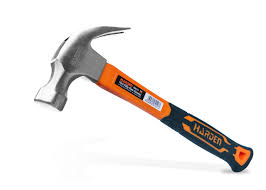
Are you tired of bent nails, damaged materials, and inefficient work that costs you time and money on construction sites? The solution lies in mastering one of the most fundamental yet often misunderstood tools in your arsenal: the claw hammer.
In the competitive UAE construction landscape, where efficiency and precision directly impact project timelines and profitability, proper tool technique isn’t just about skill—it’s about business success. The right hardware export and import practices ensure you have access to quality tools that make these techniques effective.
Also read – Claw Hammer – Fibre Handle: The Ultimate Tool for Every UAE Worksite 🛠️
The Foundation: Understanding Your Tool
Before diving into techniques, it’s crucial to understand what makes a quality claw hammer. The tool consists of two primary components: the head and the handle. The head features a striking face for driving nails and a curved claw for removal, while the handle provides leverage and shock absorption.
Perfecting Your Grip: The Three Essential Holds
The Power Grip: Place your hand at the very end of the handle, wrapping all fingers firmly around it. This grip maximizes swing power and is ideal for driving large nails or working with dense materials commonly found in UAE construction projects.
The Control Grip: Position your hand closer to the hammer head, approximately one-third of the way down the handle. This provides better accuracy for precision work and starting nails without bending them.
The Choke Grip: Hold the hammer near the head itself, perfect for delicate work, finishing touches, or working in confined spaces where full swings aren’t possible.
Mastering the Swing: From Wrist to Shoulder
Wrist Swing: Ideal for small nails and light work, this technique uses only wrist movement. It’s perfect for trim work and finishing nails where precision matters more than power.
Elbow Swing: The most common technique for general construction work, involving both wrist and elbow movement. This provides a balance of power and control for most nail-driving tasks.
Shoulder Swing: Reserved for heavy-duty work, this full-body swing generates maximum power. Use this for driving large spikes or working with extremely hard materials.
Nail Driving Techniques: Avoiding Common Mistakes
Starting Nails Properly: Hold the nail between thumb and forefinger, using light taps to set it in position before switching to your power grip for driving.
Maintaining Proper Angle: Keep the hammer face parallel to the work surface throughout the swing. Angled strikes cause bent nails and damaged materials.
Following Through: Don’t stop your swing at impact. A smooth follow-through ensures the nail is driven flush without damaging the surrounding material.
Advanced Pulling Techniques: More Than Just Removal
The Standard Pull: Position the claw under the nail head, rock the hammer back while maintaining downward pressure, and use the handle as a lever.
The Side Pull: For nails in tight spaces, use the side of the claw by turning the hammer sideways and applying leverage from a different angle.
Protective Pulling: Place a small block of wood under the hammer head to protect the work surface when pulling nails through finished materials.
Specialized Techniques for UAE Construction Conditions
The unique environmental conditions in the UAE require specialized approaches. High temperatures can affect both the tool and the materials you’re working with. Always store hammers away from direct sunlight, as extreme heat can weaken handles and affect the temper of steel heads.
When working with materials that have been exposed to the sun, adjust your technique. Warped wood or expanded metal may require different striking angles and force application. The high humidity in coastal areas can also affect material density, requiring adjustments in your swing power.
Safety Considerations for Professional Use
Always wear appropriate eye protection when using any striking tool. Inspect your hammer before each use, checking for loose heads, cracked handles, or damaged striking faces. Never use a hammer with a damaged or loose head, as this can lead to serious injury.
Choose the right hammer for the job. Using a framing hammer for finish work or vice versa not only produces poor results but increases the risk of accidents. According to OSHA guidelines, proper tool selection and maintenance are critical for workplace safety.
Tool Maintenance for Longevity
Regular maintenance ensures your claw hammer remains effective and safe. Clean the striking face regularly to remove debris that could cause nails to slip. Check the handle for cracks or splinters, and sand smooth if necessary. For steel-headed hammers, occasional light oiling can prevent rust in the UAE’s humid coastal conditions.
How it is Made: From Raw Material to Finished Product
Raw Material(s)
The primary materials used in claw hammer manufacturing include high-carbon steel for the head (typically 1045-1060 grade carbon steel) and various handle materials including hickory wood, fiberglass, or steel.
Manufacturing Process
The manufacturing begins with steel billets being heated to approximately 1200°C in forging furnaces. The heated steel is then placed in die forgers that shape the hammer head through high-pressure impact. The rough-formed heads undergo trimming to remove excess material (flash) and are then heat-treated through quenching and tempering processes. Handles are separately manufactured through turning (for wooden handles) or extrusion (for fiberglass), then assembled with the heads using wedges (wooden handles) or epoxy bonding (fiberglass). Final steps include polishing, coating application (often powder coating or plating), and quality inspection.
Key Properties Derived from Manufacturing
The forging process imparts essential strength and durability to withstand repeated impacts. Heat treatment through quenching creates surface hardness for the striking face, while tempering provides toughness to prevent chipping or cracking. The manufacturing ensures optimal weight distribution for balance and swing efficiency.
Quality Control
Quality checks include dimensional accuracy verification, hardness testing using Rockwell scales, visual inspection for surface defects, balance testing, and destructive testing on sample units to verify structural integrity under extreme conditions.
Essential Uses in the UAE Construction Landscape
Primary Application(s)
Claw hammers are indispensable across all construction phases in the UAE, from initial framing to finishing work. They’re essential for wood framing in villa construction, formwork assembly for concrete structures, drywall installation in commercial buildings, and various carpentry tasks. The dual functionality of driving and pulling nails makes them particularly valuable in the fast-paced UAE construction environment where efficiency and versatility are paramount.
Your Trusted Partner for Quality Construction Tools
For construction professionals seeking reliable hardware suppliers in the UAE, Jummana Building Materials stands as your trusted partner. Located in the Industrial Area of Sharjah, they have built a reputation for excellence in the construction materials sector.
Jummana Building Materials specializes in providing high-quality construction essentials including hand shovels, nylon and cotton ropes, mul mul fabric, and heavy-duty PVC buckets. Their extensive product range ensures that construction sites have access to all necessary tools and materials from a single reliable source.
What sets Jummana apart is their commitment to competitive wholesale pricing without compromising on quality. Their strategic location in Sharjah’s Industrial Area provides easy access for construction companies across the UAE, making them the go-to supplier for major projects throughout the region. Visit their website at gulfinquiries.com to explore their complete product catalog and discover why they’re the preferred choice for construction professionals.