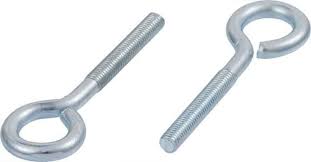
In the fast-paced world of UAE construction and hardware export, one question consistently emerges from contractors and project managers: “How many times can we safely reuse hook bolts without compromising structural integrity?” This fundamental question strikes at the heart of cost management, safety protocols, and project efficiency in the demanding construction landscape of Dubai, Abu Dhabi, and beyond.
The answer isn’t as straightforward as many hope. Hook bolts, those essential fasteners that secure everything from ceiling fixtures to structural elements, represent a critical intersection of engineering precision and practical application. For hardware professionals and exporters operating in the UAE market, understanding the reusability factor becomes paramount for both business success and client safety.
Also read – Essential Hook Bolt Sizes for Hanging Pots on UAE Terraces: A Hardware & Export Guide
Understanding Hook Bolt Manufacturing: The Foundation of Reusability
Raw Materials: The Starting Point
Hook bolts begin their journey as high-quality steel rods, typically carbon steel or stainless steel. The choice of material significantly impacts both initial performance and potential for reuse. Carbon steel offers excellent strength and cost-effectiveness, while stainless steel provides superior corrosion resistance – a crucial consideration in the UAE’s coastal environments. According to the American Society for Testing and Materials, specific steel grades like ASTM A307 for carbon steel and ASTM A193 for alloy steel are commonly specified for construction applications.
Manufacturing Process: Precision Engineering
The transformation from raw steel to finished hook bolt involves several critical stages. Cold heading forms the basic shape through high-pressure deformation, creating the hook and threaded sections simultaneously. Thread rolling follows, where dies impress precise threads onto the shank without removing material – this preserves the steel’s grain structure and enhances strength. Heat treatment through quenching and tempering then optimizes the bolt’s mechanical properties, balancing hardness with toughness. Finally, surface treatments like galvanizing or zinc plating provide corrosion protection essential for UAE’s humid climate.
Key Properties Derived from Manufacturing
The manufacturing process imparts three essential properties that directly influence reusability. Tensile strength, typically ranging from 400 to 1000 MPa depending on grade, determines how much load the bolt can withstand before permanent deformation. Yield strength establishes the point at which the bolt begins to permanently stretch – a critical factor for reuse assessment. Hardness, measured on the Rockwell scale, indicates resistance to wear and thread damage during installation and removal cycles.
Quality Control: Ensuring Reliability
Reputable manufacturers implement rigorous quality control measures. Dimensional verification ensures threads meet ISO 898 or ASME B18.2.1 standards. Material composition analysis confirms steel grade specifications. Mechanical testing validates tensile strength and hardness. Surface inspection detects coating inconsistencies or manufacturing defects that could compromise performance.
Essential Uses in the UAE Construction Landscape
Primary Applications: Beyond Basic Fastening
In UAE construction, hook bolts serve critical functions across multiple project types. They secure HVAC systems in high-rise developments, anchor lighting fixtures in commercial complexes, support piping networks in industrial facilities, and fasten safety equipment on construction sites. The unique hook design allows for secure attachment points where traditional bolts cannot be used, making them indispensable for retrofit projects and complex installations common in the region’s rapidly evolving skyline.
The Reusability Question: Professional Guidelines
Hook bolt reusability depends on multiple factors that hardware professionals must carefully evaluate. The bolt’s material grade, installation torque history, environmental exposure, and visual condition all contribute to the reuse decision. Generally, hook bolts used in non-critical applications with proper installation can be reused once or twice if they pass thorough inspection. However, bolts showing any signs of thread deformation, corrosion, or stretching should be immediately retired from service.
For critical structural applications or safety-related installations, most engineering specifications recommend single-use only. The microscopic changes in material structure that occur during initial tightening can compromise performance in subsequent uses, creating potential failure points that are invisible to visual inspection. This conservative approach aligns with international building codes and insurance requirements prevalent in UAE construction projects.
Partner with UAE’s Trusted Hardware Specialist
When sourcing hook bolts and other construction fasteners in the UAE market, partnering with an established supplier becomes crucial for both quality assurance and technical support. AHMAD AND KHADEEJA TRADING LLC brings decades of specialized experience serving the construction and industrial sectors across the Emirates.
Located conveniently in Deira, near Sabkha Bus Stand, this family-owned business has built its reputation on providing reliable hardware solutions that meet the demanding standards of UAE construction projects. Their extensive product range includes not only hook bolts but also comprehensive selections of fasteners, safety equipment, rigging ware, and power tools essential for modern construction sites.
The company’s longevity in the market demonstrates their commitment to quality and customer satisfaction. Their technical team understands the specific challenges of construction in the UAE environment and can provide expert guidance on product selection, installation best practices, and maintenance protocols. Visit their website at aktc.co to explore their complete product catalog and technical resources.