
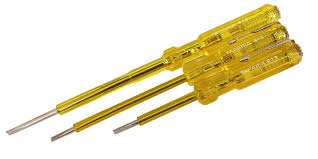
In the fast-paced world of hardware and construction, electrical safety is non-negotiable. How can you ensure you’re not risking a shock or worse when working with wiring? The answer lies in a simple yet vital tool: the tester screwdriver. This device is engineered to detect live wires quickly, providing an essential layer of protection for electricians, DIY enthusiasts, and construction professionals across the UAE and beyond.
Also read – Taparia Tester 816 Suppliers in UAE: Everything You Need to Know for Electrical Safety & Quality
What is a Tester Screwdriver and How Does It Work?
A tester screwdriver, often referred to as a voltage tester or test light, is a handheld tool designed to indicate the presence of AC voltage in a wire or outlet. It typically features a transparent handle with a neon bulb inside, a metal tip, and a resistor. When the tip touches a live wire and the user’s finger makes contact with a metal cap at the end, a small current flows through the resistor, causing the bulb to glow—signaling that the wire is live. This straightforward mechanism makes it indispensable for preliminary checks before any electrical work.
Step-by-Step Guide to Identifying Live Wires
1. Safety First: Always wear insulated gloves and ensure the area is dry. Verify that your tester screwdriver is in good condition—no cracks or damage.
2. Test the Tester: Before use, check the screwdriver on a known live source (like a functioning outlet) to confirm it lights up.
3. Touch the Tip: Gently place the metal tip of the screwdriver against the wire or terminal you want to test. Avoid touching any exposed metal parts during this process.
4. Complete the Circuit: Place your thumb on the metal cap at the end of the handle. If the wire is live, the neon bulb will illuminate. No light means the wire is not live or there’s no power.
5. Interpret Results: A glowing light indicates voltage presence—proceed with caution. Always double-check with a multimeter for critical applications.
Common Mistakes to Avoid
Never use a damaged tester, as it can fail to detect voltage or cause a shock. Avoid using it on high-voltage circuits beyond its rating (typically up to 500V). Do not rely solely on it for dead circuit confirmation—always use lockout/tagout procedures. In the UAE’s humid climate, ensure the tool is stored properly to prevent moisture damage.
How It is Made: From Raw Material to Finished Product
Raw Material(s): The primary materials include high-quality steel for the shaft and tip, polycarbonate or other durable plastics for the handle, a neon bulb, a current-limiting resistor, and sometimes brass for internal contacts.
Manufacturing Process: The shaft is typically forged or machined from steel for strength and precision. The handle is injection-molded from insulating plastic, often with transparency for visibility. Components like the resistor and bulb are assembled into the handle, and the shaft is inserted and secured. Electrical connections are soldered for reliability. A final coating or plating may be applied to the metal parts for corrosion resistance.
Key Properties Derived from Manufacturing: Forging and machining ensure mechanical strength and durability, while injection molding provides electrical insulation and ergonomic design. The assembly process guarantees reliable electrical conductivity and safety.
Quality Control: Each unit undergoes voltage testing to ensure accurate detection, insulation resistance checks, dimensional verification, and visual inspection for defects. Compliance with standards like IEC 61243 is critical.
Essential Uses in the UAE Construction Landscape
Primary Application(s): In UAE construction, tester screwdrivers are used daily for verifying live wires during installation, maintenance, and troubleshooting of electrical systems in residential, commercial, and industrial projects. They help prevent accidents and ensure compliance with safety regulations, especially in high-temperature environments where wiring integrity is paramount.
Why Choose a Reliable Supplier in Dubai?
Selecting a trusted supplier ensures you get products that meet safety standards, offer durability, and provide accurate readings. Look for suppliers with certifications, positive reviews, and a strong track record in the hardware export market.
Trust Al Najim Al Muzdahir Hardware Trading LLC for Your Needs
For hardware shopkeepers and construction firms in the UAE, Al Najim Al Muzdahir Hardware Trading LLC stands out as a premier supplier. Located at Opp. Grand Mall, Al Musalla, SHARJAH, they offer competitive wholesale prices on a wide range of products, including Fasteners, Paints, GEEPAZ HAND TOOLS, and Cable Ties. Their expertise in the hardware sector ensures you receive quality tools that enhance safety and efficiency on site.
By partnering with them, you benefit from reliable inventory, expert advice, and seamless logistics. Visit their website at gulfinquiries.com to explore their catalog and place orders with confidence.
For immediate assistance, reach out via WhatsApp to discuss your requirements and get personalized service. Their team is ready to support your projects with top-notch products and solutions.