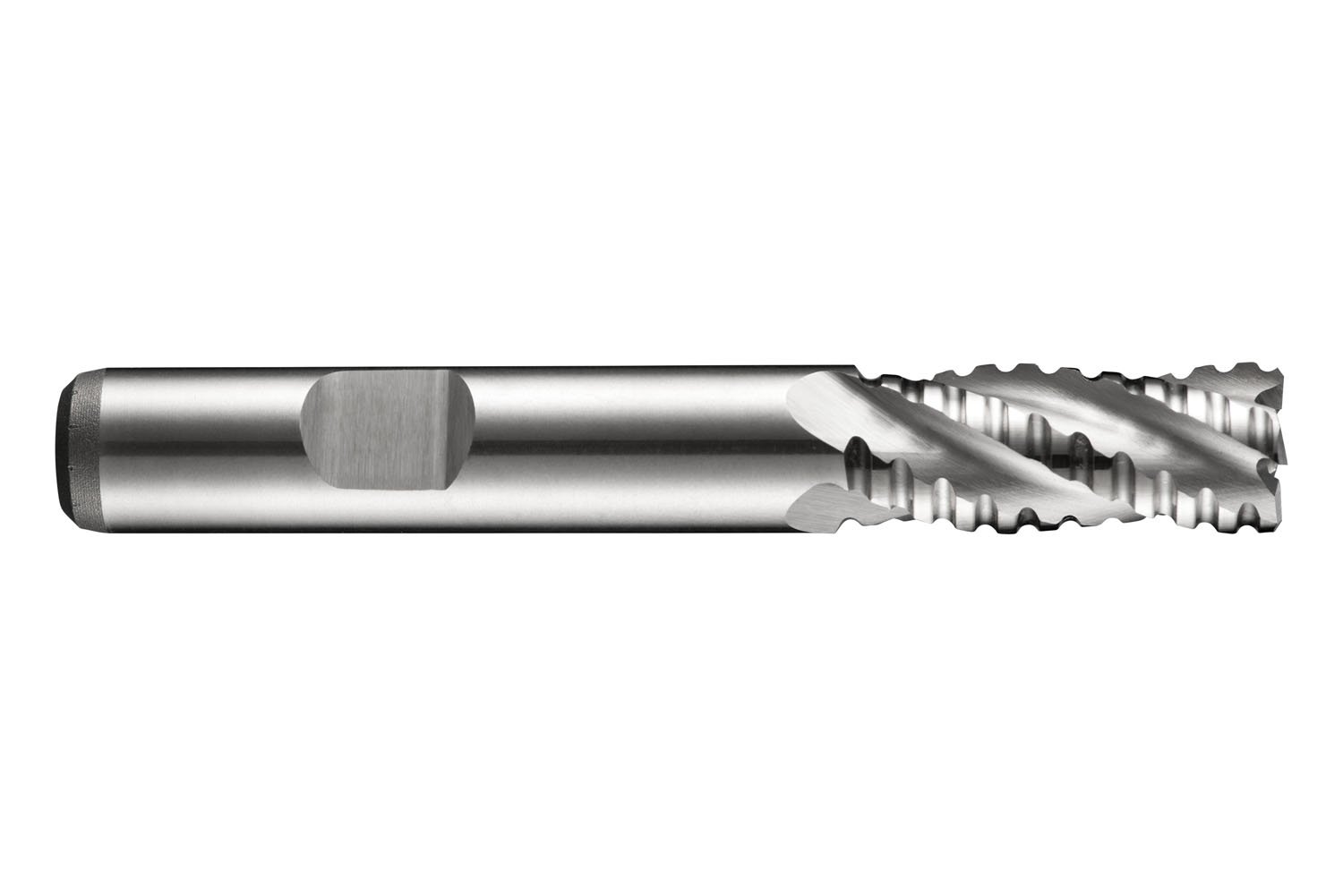
Are you tired of watching your roughing cutters fail prematurely while working on critical construction projects across the UAE? In the competitive world of hardware export and construction machinery, understanding proper roughing cutter techniques can mean the difference between project success and costly delays.
Roughing cutters are essential tools in modern construction and manufacturing, designed to remove large amounts of material quickly and efficiently. However, even experienced machinists often make critical errors that reduce tool life, compromise surface quality, and increase operational costs. This comprehensive guide reveals the most common mistakes and provides actionable solutions to optimize your machining operations.
Also read – Ultimate Guide: The Critical Role of Endmills in UAE Aerospace & Defense Projects
Mistake #1: Incorrect Speed and Feed Rates
The most fundamental error machinists make is using improper speed and feed rates. Running roughing cutters too fast generates excessive heat, leading to premature tool wear and potential failure. Conversely, running too slow causes rubbing rather than cutting, resulting in poor surface finish and reduced productivity. According to machining experts at Sandvik Coromant, optimal parameters vary based on material, cutter diameter, and machine capability.
Mistake #2: Poor Toolpath Strategies
Many operators use outdated toolpath strategies that create unnecessary stress on cutters. Traditional zig-zag patterns often produce sharp directional changes that shock the tool and workpiece. Modern trochoidal and adaptive clearing toolpaths maintain consistent chip loads and reduce tool engagement, significantly extending cutter life while improving material removal rates.
Mistake #3: Ignoring Chip Load Calculations
Chip load – the thickness of material removed by each cutting edge – is critical for roughing operations. Too light chip loads cause rubbing and heat buildup, while excessive chip loads can break cutting edges. Proper chip load calculation considers the number of flutes, spindle speed, and feed rate to achieve optimal material removal without compromising tool integrity.
Mistake #4: Inadequate Coolant Application
In the UAE’s demanding climate, proper coolant management becomes even more crucial. Many machinists either use insufficient coolant or apply it incorrectly. Flood coolant should reach the cutting zone directly to dissipate heat and flush chips. For certain materials and operations, through-tool coolant provides superior performance by delivering coolant directly to the cutting edges.
Mistake #5: Wrong Cutter Selection for Material
Selecting inappropriate roughing cutters for specific materials is a common oversight. Aluminum requires different cutter geometries and coatings than steel or stainless steel. Carbide roughing end mills with variable helix angles and specialized coatings outperform standard tools when machining difficult materials commonly used in UAE construction projects.
Mistake #6: Poor Workholding and Rigidity
Insufficient workpiece clamping and machine rigidity lead to vibration and chatter, which dramatically reduce tool life and surface quality. Ensuring proper workholding, machine maintenance, and using the shortest possible tool extensions are essential for successful roughing operations in high-volume construction applications.
Mistake #7: Neglecting Tool Maintenance
Regular inspection and maintenance of roughing cutters are often overlooked. Dull tools require more power, generate excess heat, and produce poor surface finishes. Implementing a systematic tool inspection program and proper resharpening protocols can extend tool life by up to 300% while maintaining consistent performance.
Mistake #8: Incorrect Depth of Cut
Using either too shallow or excessively deep cuts compromises efficiency and tool life. Modern roughing strategies favor deeper axial cuts with reduced radial engagement, which maintains consistent chip loads and distributes wear across more of the cutter’s length. This approach is particularly effective when machining the hard materials common in Middle Eastern construction.
Mistake #9: Overlooking Tool Runout
Tool runout – the deviation from perfect rotation – causes uneven loading on cutting edges, leading to premature failure. Even minimal runout significantly impacts tool life and surface finish. Regular measurement and correction of runout through proper collet maintenance and toolholder selection are essential for optimal roughing performance.
Mistake #10: Failing to Adapt to Material Variations
Construction materials in the UAE often exhibit batch-to-batch variations in hardness and machinability. Successful machinists monitor cutting forces and adjust parameters accordingly, rather than relying on fixed settings. Modern CNC machines with adaptive control capabilities can automatically adjust to material variations, maintaining optimal cutting conditions.
How Roughing Cutters Are Made: From Raw Material to Finished Product
Raw Material(s)
Premium roughing cutters primarily use tungsten carbide as the base material, combined with cobalt as a binder. High-quality cutters may incorporate specialized coatings like Titanium Aluminum Nitride (TiAlN) or Aluminum Titanium Nitride (AlTiN) for enhanced performance.
Manufacturing Process
The manufacturing process begins with powder metallurgy, where tungsten carbide and cobalt powders are mixed in precise ratios. This mixture is pressed into green compacts using hydraulic presses at pressures up to 30,000 psi. The compacts then undergo sintering in vacuum furnaces at temperatures around 1,400°C, transforming them into solid carbide blanks. CNC grinding machines with diamond wheels precisely form the cutting edges, flutes, and geometries. Finally, advanced Physical Vapor Deposition (PVD) or Chemical Vapor Deposition (CVD) processes apply specialized coatings to enhance performance.
Key Properties Derived from Manufacturing
The sintering process creates exceptional hardness (up to 92 HRA), enabling the cutters to withstand the abrasive materials common in construction. The precise grinding ensures sharp cutting edges and optimal geometries for efficient chip evacuation. Specialized coatings provide superior heat resistance (up to 800°C) and reduced friction, crucial for the high-temperature conditions encountered in UAE construction projects.
Quality Control
Manufacturers implement rigorous quality control measures including dimensional verification using coordinate measuring machines (CMM), material composition analysis through spectroscopy, coating thickness measurement, and performance testing under simulated working conditions. Each cutter undergoes visual inspection for defects and cutting edge integrity before packaging.
Essential Uses in the UAE Construction Landscape
Primary Application(s)
Roughing cutters are indispensable in the UAE construction industry for machining structural steel components, aluminum formwork systems, and concrete mold patterns. They’re extensively used in fabricating steel frameworks for high-rise buildings, bridge components, and infrastructure projects. The rapid urbanization and massive construction initiatives across the Emirates demand efficient material removal capabilities that only properly utilized roughing cutters can provide.
Your Trusted Partner for Quality Cutting Tools in the UAE
For construction professionals and machinists across the United Arab Emirates, AL MIFTHAAH BUILDING & CONSTRUCTION MATERIALS TRADING CO LLC stands as your reliable partner for premium cutting tools. Located in the heart of Al Fahidi Bur Dubai, this established company has built a reputation for supplying high-quality machining tools that meet the rigorous demands of UAE construction projects.
AL MIFTHAAH specializes in comprehensive tooling solutions including ABRASIVES, DRILLING TOOLS, MACHINE TOOLS ACCESSORIES, and MILLING TOOLS from trusted international brands. Their extensive inventory ensures that construction companies and machining workshops have access to the right tools for every application, whether working with structural steel, aluminum, or specialized alloys common in Middle Eastern construction.
With their strategic location in Dubai’s commercial hub and commitment to quality, AL MIFTHAAH provides expert guidance on tool selection and application techniques. Their team understands the unique challenges of machining in the UAE environment and offers solutions optimized for local conditions. Visit their website at https://almifthaahbacmtrading.com/ to explore their complete product range and technical resources.