Are You Wasting Time and Money on Inefficient Material Removal?
In the competitive world of UAE construction and hardware export, efficiency isn’t just a goal—it’s a necessity. Every minute saved in material processing translates to faster project completion and higher profitability. The challenge most workshop managers face is finding the right balance between speed and precision when removing large amounts of material from workpieces.
The solution lies in mastering one of the most fundamental yet misunderstood tools in modern machining: the roughing endmill. This powerful cutting tool represents the bridge between raw material preparation and fine finishing work, making it essential for any serious construction hardware operation in Dubai and across the UAE.
Also read – Ultimate Guide: Top 10 Ways to Reduce Wear and Tear of Endmills in UAE Workshops
Understanding Roughing Endmills: The Workhorse of Material Removal
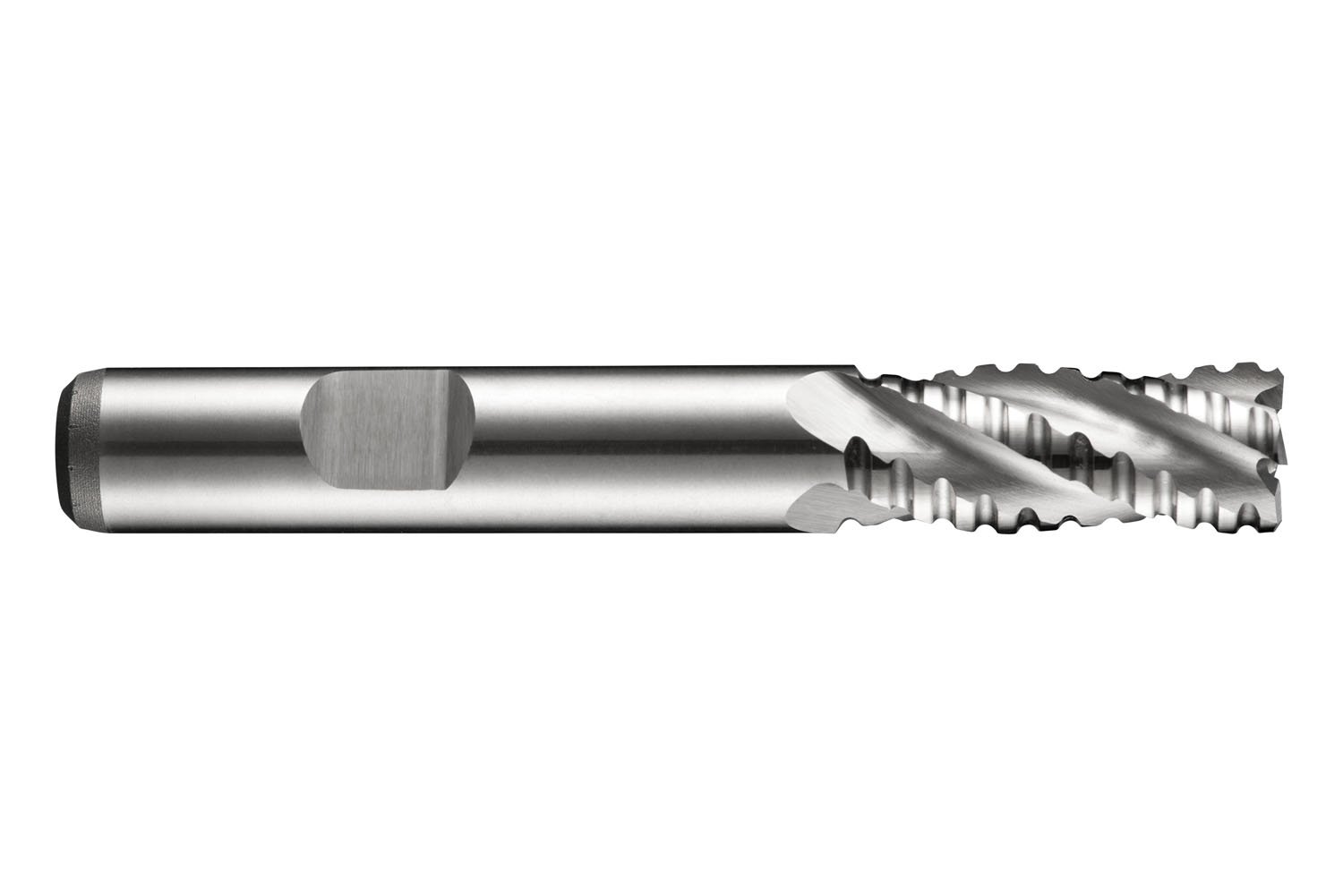
Roughing endmills, often called “rippa” cutters, are specialized milling cutters designed for aggressive material removal. Unlike finishing endmills that prioritize surface quality, roughing endmills focus on maximum material removal rates while maintaining tool integrity. Their distinctive serrated cutting edges break chips into smaller pieces, reducing cutting forces and preventing vibration.
How Roughing Endmills Are Made: From Raw Material to Precision Tool
Raw Materials
The journey begins with high-quality steel alloys, primarily high-speed steel (HSS) or carbide. Premium roughing endmills often use cobalt-enriched HSS or micro-grain carbide for enhanced performance in demanding UAE construction applications.
Manufacturing Process
The manufacturing involves several precision stages: material selection and cutting, CNC grinding of flutes and cutting edges, heat treatment for hardness, and surface coating application. Advanced manufacturers use 5-axis CNC grinding machines to create the complex geometries that define effective roughing endmills.
Key Properties Derived from Manufacturing
The manufacturing process imparts critical properties including exceptional hardness (HRC 60-65 for HSS, up to 90 for carbide), superior toughness to withstand interrupted cuts, and thermal stability to handle the intense heat generated during high-speed material removal in UAE’s demanding workshop environments.
Quality Control
Rigorous quality checks ensure dimensional accuracy within microns, material composition verification, hardness testing, and visual inspection for defects. Reputable manufacturers adhere to international standards like ISO 9001 and specific tool standards such as DIN 6527.
Essential Uses in UAE Construction Landscape
In the UAE’s booming construction sector, roughing endmills serve critical functions in steel fabrication workshops, aluminum window and door manufacturing, and concrete formwork production. They’re indispensable for quickly removing large amounts of material from structural steel components, creating slots and pockets in aluminum extrusions for building facades, and machining custom components for the region’s iconic architectural projects.
Step-by-Step Guide to Using Roughing Endmills
Step 1: Tool Selection and Setup
Begin by selecting the appropriate roughing endmill based on your material. For aluminum and non-ferrous metals common in UAE construction, choose endmills with high helix angles and sharp cutting edges. For steel and stainless steel, opt for tools with stronger geometries and specialized coatings.
Step 2: Machine Preparation
Ensure your milling machine is properly maintained and calibrated. Check spindle runout—it should be less than 0.01mm for optimal performance. Use a precision collet or endmill holder to minimize vibration and ensure secure tool holding.
Step 3: Workpiece Securing
Proper workholding is crucial in UAE’s high-temperature environments where thermal expansion can affect accuracy. Use vises with sufficient clamping force and consider using soft jaws for irregular shapes. Always ensure the workpiece is securely fixed to prevent movement during aggressive cutting.
Step 4: Establishing Cutting Parameters
Start with conservative speeds and feeds, then gradually increase based on tool performance. For roughing endmills in aluminum, typical parameters might include: spindle speed of 2000-3000 RPM, feed rate of 500-1000 mm/min, and depth of cut up to 1.5 times the tool diameter. Always refer to manufacturer recommendations and adjust for local conditions.
Step 5: Implementing Proper Cutting Techniques
Use climb milling whenever possible for better surface finish and tool life. Maintain consistent chip load to prevent tool rubbing and overheating. For deep pockets, use trochoidal milling techniques to distribute heat and load more evenly across the cutting edges.
Step 6: Coolant and Lubrication Strategy
In the UAE’s climate, proper cooling is essential. Use flood coolant for most applications, ensuring adequate coverage of the cutting zone. For aluminum, consider using specialized coolants that prevent material adhesion to the cutting edges.
Step 7: Monitoring and Maintenance
Regularly inspect tools for wear patterns. Look for chipping, flank wear, and built-up edge. Establish a tool rotation schedule to extend tool life and maintain consistent performance across your operations.
Common Mistakes to Avoid
Many beginners in UAE workshops make critical errors including using incorrect speeds and feeds, improper tool holding, neglecting coolant application, and continuing to use worn tools. These mistakes not only damage tools but can compromise workpiece quality and machine integrity.
Best Practices for UAE Conditions
Adapt your roughing strategies to local conditions. The high ambient temperatures in the UAE mean tools may run hotter than manufacturer specifications suggest. Consider reducing speeds by 10-15% during peak summer months and increase coolant concentration to combat evaporation.
Trusted Supplier for Your Roughing Endmill Needs
When it comes to sourcing reliable roughing endmills for your UAE construction or hardware export business, quality and consistency are paramount. AL MIFTHAAH BUILDING & CONSTRUCTION MATERIALS TRADING CO LLC stands as your trusted partner in the region.
Located in the heart of Dubai at Al Fahidi Bur Dubai, AL MIFTHAAH specializes in providing high-quality milling tools from internationally recognized brands. Their extensive inventory includes precisely the types of roughing endmills discussed in this guide, ensuring you have access to tools that meet the demanding requirements of UAE construction projects.
The company’s expertise spans across multiple tool categories including ABRASIVES, DRILLING TOOLS, MACHINE TOOLS ACCESSORIES, and of course, MILLING TOOLS. Their team understands the unique challenges faced by workshops in the region and provides technical support to help you select the right tools for your specific applications. Visit their website at https://almifthaahbacmtrading.com/ to explore their comprehensive product range.