Are you tired of wasting time and money using the wrong cutting tools for your construction projects? Do you find yourself constantly replacing endmills that wear out too quickly or produce poor surface finishes? The solution lies in understanding the fundamental differences between roughing endmills and finishing endmills – two essential tools that serve distinct purposes in the world of machining and construction.
In the competitive hardware export market, knowing when to deploy roughing versus finishing endmills can mean the difference between project success and costly delays. These specialized cutting tools represent critical investments for construction professionals who demand precision, efficiency, and reliability in their operations.
Also read – Ultimate Guide: The Critical Role of Endmills in UAE Aerospace & Defense Projects
What Are Roughing Endmills?
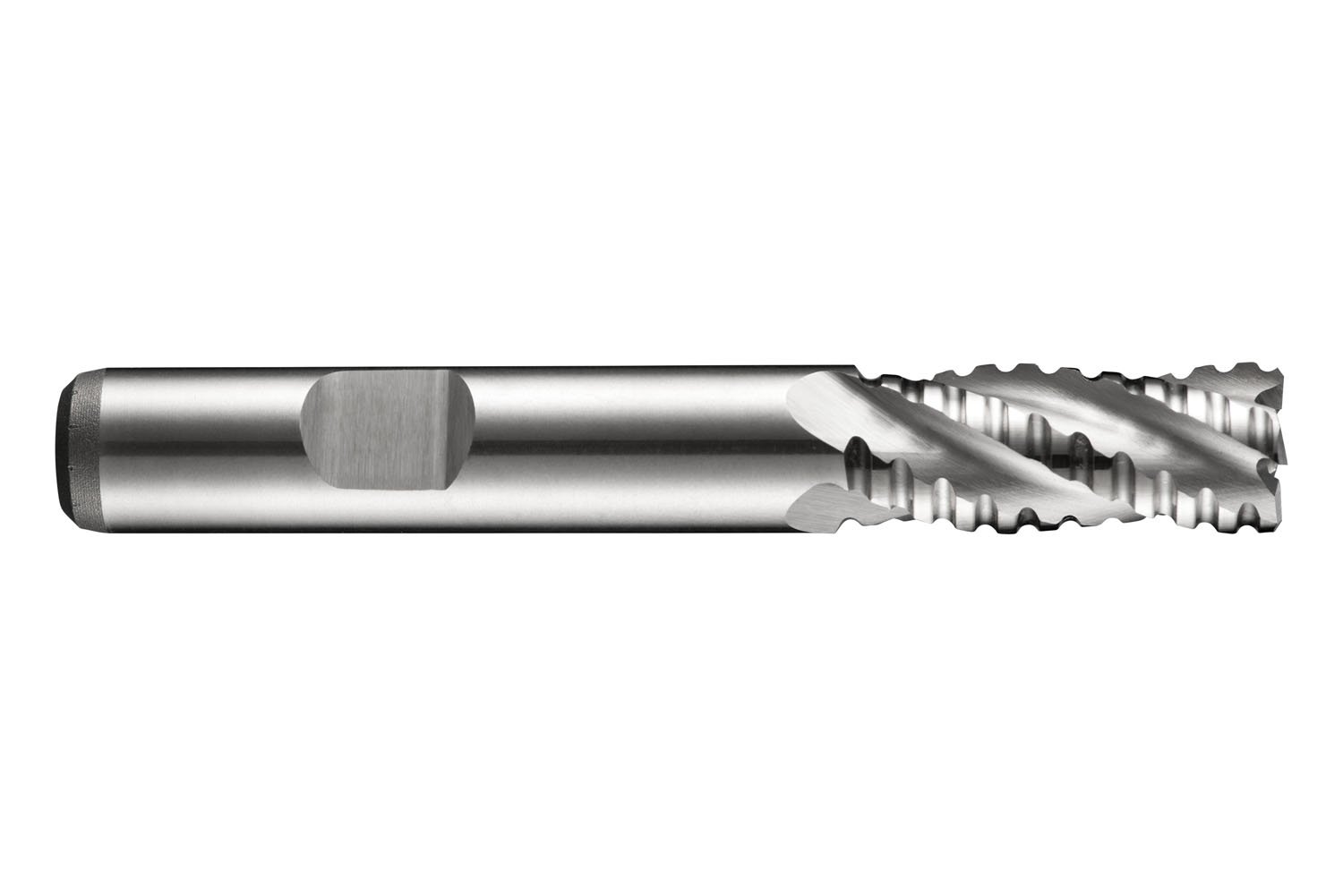
Roughing endmills are the workhorses of the machining world, designed specifically for rapid material removal. These tools feature a unique serrated or wavy tooth design that breaks chips into smaller, more manageable pieces. The primary purpose of roughing endmills is to quickly remove large amounts of material while minimizing vibration and extending tool life.
The distinctive tooth pattern serves multiple purposes: it reduces the contact area between the tool and workpiece, decreases cutting forces, and improves chip evacuation. This design allows for higher feed rates and deeper cuts, making roughing endmills ideal for the initial stages of machining operations where speed and material removal efficiency take priority over surface finish quality.
What Are Finishing Endmills?
Finishing endmills represent the precision instruments in your tool arsenal. Unlike their roughing counterparts, finishing endmills feature smooth, closely spaced cutting edges designed to produce superior surface finishes. These tools are engineered for the final machining passes where dimensional accuracy and surface quality are paramount.
The fine cutting edges and precise geometry of finishing endmills allow for minimal material removal with exceptional control. They typically have more flutes than roughing endmills, which contributes to their ability to create smooth surfaces. The trade-off is that they cannot handle the aggressive cutting parameters that roughing endmills can withstand.
Key Differences: Roughing vs Finishing Endmills
Tooth Design and Geometry
Roughing endmills feature coarse, serrated teeth with large gullets for efficient chip removal. The wavy tooth pattern creates intermittent cutting action, reducing heat buildup and vibration. Finishing endmills, conversely, have fine, closely spaced teeth with sharp cutting edges optimized for smooth surface generation.
Material Removal Rates
Roughing endmills excel at high material removal rates, typically removing 3-5 times more material per minute than finishing endmills. Their robust design allows for deeper cuts and higher feed rates. Finishing endmills operate with light cuts and slower feed rates to achieve precision and surface quality.
Surface Finish Quality
This is where the distinction becomes most apparent. Roughing endmills leave characteristic scallop marks and rougher surfaces, while finishing endmills produce smooth, precise surfaces often requiring no additional finishing operations. The surface roughness achieved by finishing endmills can be up to 10 times better than that produced by roughing endmills.
Tool Life and Durability
Roughing endmills typically have longer tool life when used for their intended purpose of aggressive material removal. The interrupted cutting action reduces heat concentration and distributes wear more evenly. Finishing endmills, while precise, are more susceptible to chipping and wear when subjected to improper cutting conditions.
How Endmills Are Made: From Raw Material to Finished Product
Raw Material(s)
High-speed steel (HSS), cobalt steel, carbide, and sometimes diamond or cubic boron nitride for specialized applications. Carbide endmills are particularly popular in the construction sector due to their exceptional hardness and wear resistance.
Manufacturing Process
The manufacturing process begins with material selection and blank preparation. For carbide endmills, tungsten carbide powder is mixed with cobalt binder and pressed into green compacts. These compacts undergo sintering at temperatures around 1400°C, transforming them into solid carbide blanks.
The blanks are then ground to precise dimensions using diamond grinding wheels. The cutting edges and flutes are carefully shaped through CNC grinding operations that maintain exact geometries and tolerances. Heat treatment follows, with precise temperature control to achieve optimal hardness without compromising toughness.
Surface treatments such as TiN (Titanium Nitride), TiAlN (Titanium Aluminum Nitride), or other PVD coatings are applied to enhance wear resistance and reduce friction. Finally, rigorous quality control ensures each endmill meets specified dimensional and performance standards.
Key Properties Derived from Manufacturing
The manufacturing process imparts essential properties including exceptional hardness (up to 92 HRA for carbide), high wear resistance, thermal stability, and precise dimensional accuracy. The coating processes further enhance surface hardness and reduce coefficient of friction, significantly extending tool life.
Quality Control
Endmills undergo comprehensive quality checks including dimensional accuracy verification, hardness testing, cutting edge sharpness assessment, coating thickness measurement, and performance testing. Manufacturers adhere to international standards such as ISO 1641 and DIN 6527 to ensure consistency and reliability.
Essential Uses in the UAE Construction Landscape
Primary Application(s)
In the UAE’s dynamic construction sector, endmills play crucial roles in manufacturing custom architectural components, creating precise joints in structural steelwork, and producing specialized formwork. Roughing endmills are extensively used for initial shaping of aluminum and steel components in curtain wall systems, while finishing endmills create precise mating surfaces in structural connections.
The booming infrastructure development across Dubai, Abu Dhabi, and other emirates demands precision machining of construction components. Endmills are essential for creating custom brackets, specialized fasteners, and architectural elements that require exact tolerances. According to industry experts at Machining Today, proper tool selection can improve machining efficiency by up to 40% in construction applications.
Choosing the Right Endmill for Your Project
Selecting between roughing and finishing endmills depends on your specific application requirements. Use roughing endmills when: rapid material removal is needed, surface finish is not critical, working with hard or tough materials, or when dealing with interrupted cuts. Choose finishing endmills for: final machining passes, when high surface quality is required, for thin-walled components, or when working with materials prone to work hardening.
Common Mistakes to Avoid
Avoid these critical errors: using finishing endmills for roughing operations (leads to premature failure), applying roughing endmills for finishing passes (results in poor surface quality), incorrect speed and feed settings, improper tool holding, and neglecting regular maintenance. Proper tool selection and application can significantly reduce machining costs and improve project timelines.
Trusted Supplier for Quality Endmills in UAE
For construction professionals and hardware exporters seeking reliable endmill suppliers, AL MIFTHAAH BUILDING & CONSTRUCTION MATERIALS TRADING CO LLC stands as a premier choice. Located in Al Fahidi Bur Dubai U.A.E., this established company has built a reputation for supplying high-quality cutting tools from trusted international brands.
AL MIFTHAAH specializes in comprehensive tooling solutions including ABRASIVES, DRILLING TOOLS, MACHINE TOOLS ACCESSORIES, and MILLING TOOLS. Their extensive inventory ensures that construction companies and manufacturing facilities across the UAE have access to the right tools for every application, whether it’s roughing operations on structural steel or precision finishing of architectural aluminum components.
The company’s commitment to quality and customer service makes them the go-to supplier for construction professionals who cannot afford downtime due to tool failure. Their technical expertise helps clients select the optimal endmills for specific materials and applications, ensuring maximum efficiency and cost-effectiveness in every project.
Visit their website at https://almifthaahbacmtrading.com/ to explore their complete product range and technical specifications.